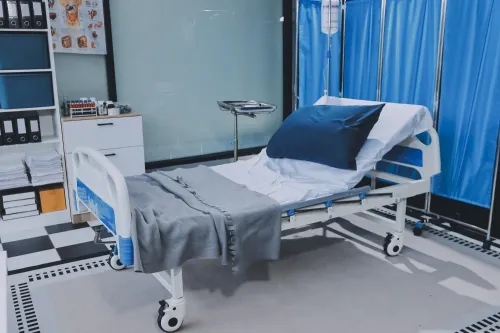

Hospital bed procurement can appear straightforward until a facility begins comparing sizes, adjustment mechanisms, side rails, castors, accessories, mattresses, and specialized configurations. Choosing only by price or appearance can result in beds that do not match clinical workflow.
For institutions planning to buy hospital beds in Chennai, avoiding a few common mistakes can improve both procurement efficiency and everyday usability.
Mistake 1: Using One Bed Type Everywhere
Different departments serve different patient groups.
General wards may work effectively with standard manual or semi-electric beds, while intensive care areas can require greater adjustability and accessibility. Recovery rooms, private rooms, and long-stay facilities may have their own priorities.
Create a department-wise requirement instead of purchasing one configuration for the entire hospital.
Mistake 2: Ignoring Room Dimensions
Bed dimensions should be evaluated alongside the space required for staff, attendants, medical equipment, and patient movement.
Measure doorways, elevators, corridors, and bed spaces before ordering. A bed that fits inside a room may still create difficulties when it needs to be transported through the facility.
Mistake 3: Looking Only at Initial Cost
A low purchase price does not automatically mean a lower long-term cost.
Consider:
- Frequency of use
- Construction
- Moving components
- Castors and brakes
- Adjustment mechanisms
- Maintenance requirements
- Accessory compatibility
For powered models, electrical and motor-related maintenance should also form part of the evaluation.
Mistake 4: Overlooking Cleaning
Beds are routinely exposed to hospital cleaning and disinfection procedures. Complex surfaces, inaccessible areas, and difficult-to-clean components can create additional work for housekeeping teams.
Evaluate the complete bed structure from a maintenance and hygiene perspective.
Mistake 5: Forgetting About Mattresses and Accessories
The bed frame is only one part of the complete setup. Depending on the application, facilities may also need compatible mattresses, IV pole provisions, side rails, urine-bag holders, or other accessories.
Confirm what is included and what needs to be procured separately.
Mistake 6: Excluding Clinical Staff From Selection
Nurses and caregivers interact with hospital beds every day. Their feedback can reveal practical issues that may not be obvious from a product specification sheet.
In Chennai, healthcare facilities range from compact nursing homes to large hospitals serving patients across Tamil Nadu. Procurement requirements therefore need to reflect the individual facility rather than a generic hospital setup.
Optimal Aid India is among the manufacturers serving institutional hospital-furniture requirements in this market.
A practical buying process should combine clinical requirements, dimensions, functionality, maintenance, mobility, and expected utilization. Ask for detailed specifications and compare shortlisted models against the same checklist.
Hospital beds are long-term operational assets. Taking additional time during evaluation can help a facility choose beds that integrate more naturally with patient care, staff workflow, available infrastructure, and future equipment planning.
Keywords