

A manual bed becomes a patient-safety risk when its crank binds, its backrest moves unpredictably, or staff cannot obtain replacement parts. You will learn how to operate and inspect the mechanism, respond to a failure during care, and decide when a manual bed no longer suits your workload.
Key takeaways
- Apply all castor brakes before adjusting a patient’s bed.
- Check whether the crank turns freely before calling for repairs.
- Inspect for corrosion, brake failure, loose fasteners and missing parts.
- Match bed operation type to patient needs, staff workload and service support.
Run a Safe Semi-Fowler Bed Operation Before Moving the Patient
A safe semifowler hospital bed operation starts with identifying the crank marked for backrest adjustment. Apply all castor brakes, confirm that the patient and accessories remain within the stated safe working load, and check whether that rating includes the mattress, IV poles, traction equipment, and other attachments.
- Check that bedding, clothing, hands, feet, and limbs are clear of the backrest hinges, frame gaps, and moving linkages.
- Tell the patient what will move, then turn the crank in the marked direction using gradual movements.
- Watch and listen for smooth travel. Stop immediately for binding, abnormal noise, slipping, or unexpected movement; never force a stuck crank.
- Stop at the specified angle, commonly 30–45 degrees. Do not rely only on the Semi-Fowler label because backrest geometry and angle scales differ.
- Return the crank to its holder so the handle cannot project into the walking path.
- Confirm that the backrest stays at the selected angle and does not drift before you leave the bed.
Use two staff members for repositioning when the patient is dependent, unstable, heavy, or attached to lines and equipment. For a controlled transfer, lower the side rails on the transfer side after checking the route and applying the brakes.
Rails do not replace patient assessment or a restraint policy; they can create climbing, falling, and entrapment hazards. Assess the bed, mattress, rails, and accessories as one system.
Separate a Crank Adjustment Problem from a Repair Fault
A handle that turns freely while the backrest stays still indicates a repair fault, not a lubrication problem. Hospital bed crank issues of this kind point to a disconnected linkage, stripped or worn worm gear, displaced pin, or damaged drive train.
Use this decision path:
- If the crank is stiff or jammed, stop turning and look for an obstruction beneath the backrest. Check for frame misalignment, an overloaded bed, a bent crank shaft, contaminated pivots, or a damaged thrust bearing.
- If it squeaks, inspect dry pivot points. If the handle or shaft wobbles, stop and check for a loose handle or shaft.
- If movement reaches its end early, suspect a mechanical limit or linkage fault. If the crank turns the backrest in the wrong direction, stop and verify the marked direction and crank assembly before further use.
- Do not force the mechanism against its designed end stop. Never add a pipe or extension bar; extra leverage can damage the gearbox and linkage.
If the crank fails with a patient on the bed, support the backrest without placing hands near pinch points. Follow your safe clinical transfer procedure, attach a no-use tag, record the bed asset number, and escalate the repair.
Do not resume operation after temporary movement until a competent person has assessed the fault.
Inspect Chennai Beds for Corrosion, Brake Failure and Missing Parts
Routine inspection catches manual hospital bed problems in Chennai before a breakdown strands a patient: check loose fasteners, damaged welds, cracked ABS panels, missing crank handles, side rails that fail to latch, worn wheels, and castor brakes that fail a realistic push test. Push the braked bed firmly; any movement is a failure.
After cleaning, remove disinfectant residue, wipe the frame dry, and inspect carbon-steel fasteners, crank shafts, wheel hardware, and exposed bearings for corrosion caused by humidity and salt exposure. Tighten hardware, check the backrest angle, and lubricate screw and pivot points only with a manufacturer-approved lubricant. Record each defect against the asset number.
| Check | Acceptable finding | Remove from service |
|---|---|---|
| Brake and wheel | Bed stays still during a firm push | Castor slips, binds, or rolls |
| Side rail and crank | Rail latches; handle turns and backrest responds | Rail will not latch or handle is missing |
| Frame and panels | Welds and ABS panels remain intact | Crack, sharp edge, or damaged weld |
A waterproof mattress cover is not automatically fluid-proof. Procurement teams must inspect welded seams, protected closures, chemical resistance, and cracked material; a split seam can contaminate the foam.
Require an exploded parts list, component identification numbers, compatible wheels and gear assemblies, repair instructions, and a defined technician response time. Without those items, a seized fastener or worn gear can keep a repairable bed out of service.
Choose Manual, Semi-Electric or Fully Electric for the Actual Workload
Choose by the number and frequency of adjustments, not by the bed’s purchase price. The question behind hospital beds manual for operation problems in Chennai is whether failures come from poor maintenance or a workload mismatch.
A manual bed works during an outage only when its crank, linkage, backrest supports, castor brakes and frame function; battery backup cannot repair a stripped gear or bent linkage.
| Option | Workload fit | Checks and trade-offs |
|---|---|---|
| Manual | Occasional positioning, outage resilience | Lowest electrical dependence and simpler electrical servicing, but a staff member turns the crank for every adjustment. Inspect the crank, linkage and brakes. |
| Semi-electric | Regular use of selected powered movements | Reduces effort for those movements. Check battery charging, backup operation, hand-control disinfection and cable condition. |
| Fully electric | Frequent repositioning and height changes | Delivers faster repeated positioning and powered height adjustment. Budget for higher purchase cost, battery replacement, electrical servicing and staff training. |
A manual bed is a poor fit when patients need frequent repositioning and no trained staff member can operate the mechanism safely. Train staff to identify each control, follow picture and local-language labels, report abnormal noise and attach a no-use tag after uncontrolled movement.
Ask whether the safe working load includes the mattress, IV pole, traction equipment and every accessory; otherwise the patient’s weight alone can produce a misleading capacity decision.
Specify Training, Labels and Service Support Before Ordering Beds
Put these requirements in the purchase order, not in a later training memo. Every bed must have a picture-based label for each crank showing its function, safe rotation direction, intended angle range, maximum safe working load, pinch-point warnings, and the correct stored position for the handle.
Training records should show that staff can:
- Operate each crank normally and stop at the designed end stop.
- Report squeaking, grinding, binding, uncontrolled movement, or other abnormal noise.
- Apply and test castor brakes before adjustment or transfer.
- Coordinate patient transfers, keeping limbs, bedding, and equipment clear of moving sections.
- Attach an immediate no-use tag when movement is uncontrolled or a fault is suspected.
Ask every supplier to provide:
- A preventive-maintenance schedule and repair instructions.
- An exploded spare-parts diagram with identification numbers for wear components.
- Compatible mattress and side-rail specifications.
- Approved lubricant names and application points.
- A written technician response time.
Compare construction claims against evidence:
| Feature | Require in the specification | Check before ordering |
|---|---|---|
| Corrosion protection | Powder coating or corrosion-resistant material | Inspect finish, fasteners, shafts, and wheel hardware |
| Bearings | Sealed or protected bearings | Ask how disinfectant and moisture are excluded |
| Hardware | Stainless or suitably coated hardware | Confirm replacement availability |
| Cleaning | Written wipe-dry procedure | Check that staff can follow it after disinfection |
Provide Tamil or another local-language version where staff need it. Include Optimal Aid India in the comparison only after checking documented serviceability, replacement-part access, instructions, and fit with the facility’s repositioning workload.
Related products
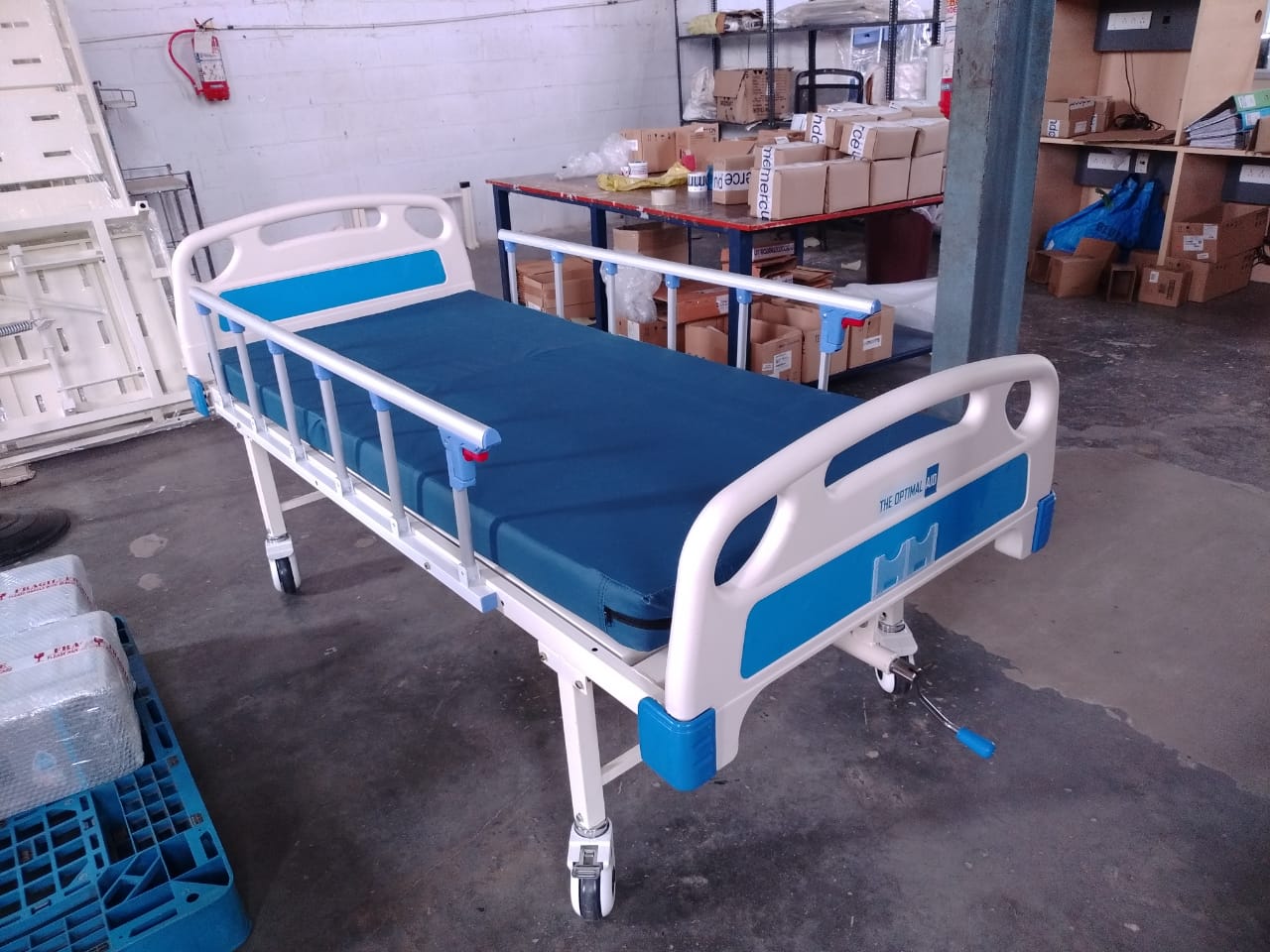 | Hospital Furniture Semi Fowler Deluxe (Manual) Bed – User Manual In Chennai 🔧 1. View product → |
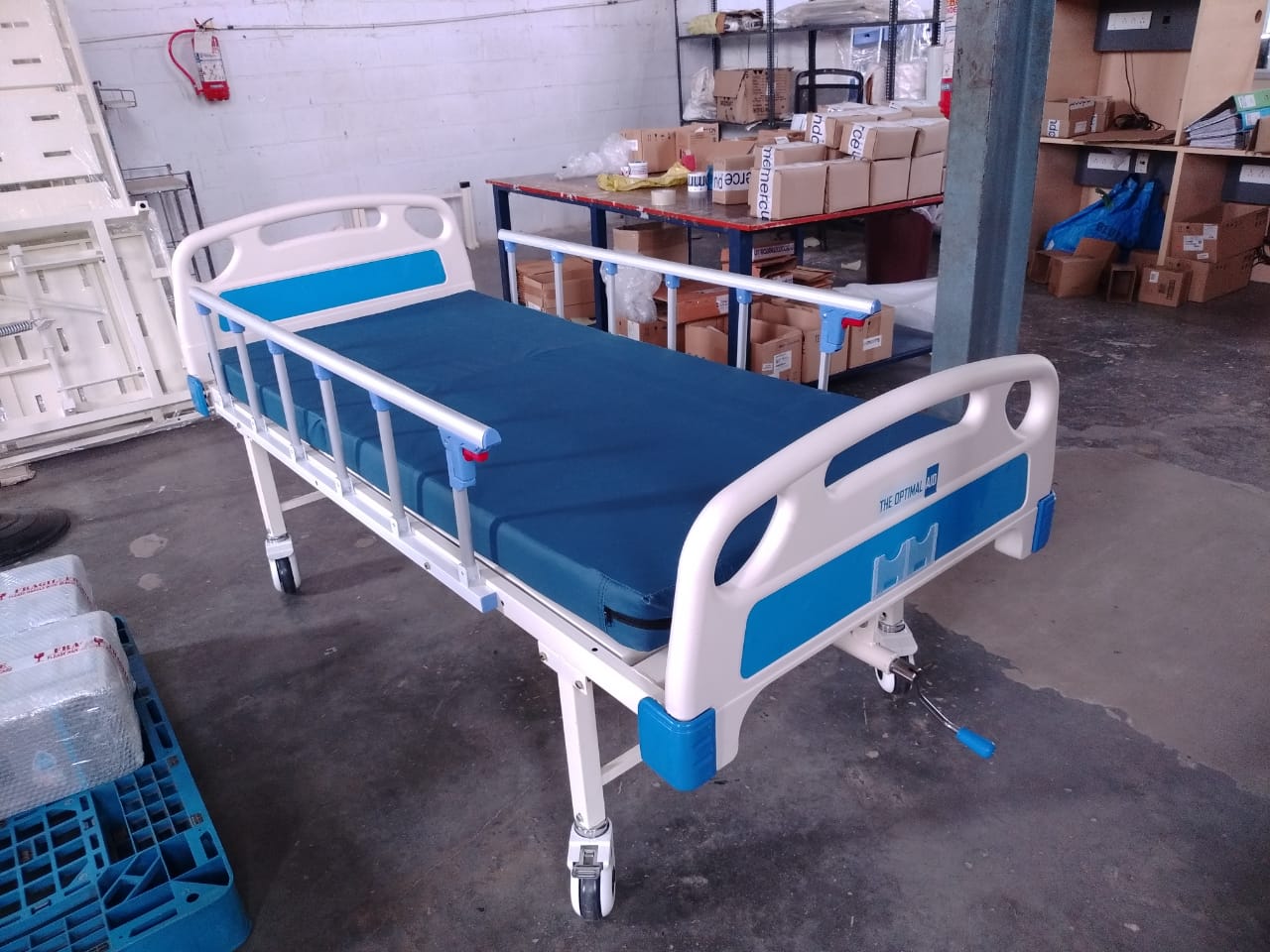 | Cot Series Semi Flowler Cot Deluxe Wheel Leg Manual Semi Flowler Cot Deluxe Wheel Leg Manual In Chennai. We wre one of the Leading and best quality manufacturer of Hospital Furniture In chennai and we... View product → |
Frequently asked questions
How do you operate a semi-Fowler hospital bed safely?
Identify the backrest crank, apply all castor brakes, check the safe working load, and confirm that attachments and accessories stay within that limit before moving the patient.
How can you distinguish a hospital bed crank issue from a repair fault?
Check for an obstructed mechanism, incorrect crank use, loose parts or abnormal resistance. Stop operation and request repair when the crank slips, binds, makes unusual noise or fails to move the backrest.
What should Chennai hospitals inspect on manual hospital beds?
Inspect the frame and joints for corrosion, test castor brakes, check fasteners and side rails, and confirm that cranks, mattress supports and other required parts are present.
When should a hospital choose a manual, semi-electric or fully electric bed?
Choose based on the frequency of repositioning, patient mobility, caregiver workload, power availability, cleaning demands and the facility’s ability to maintain each operating system.
Keywords