

A manual bed that still looks clean can hide a failing brake, dry screw thread, loose side-rail latch or corrosion at a frame joint. By following a defined inspection, cleaning, testing and documentation routine, you can identify unsafe beds before a transfer or patient-care task exposes the fault.
Key takeaways
- Follow the manufacturer’s IFU for cleaners, lubrication points and service intervals.
- Inspect each bed before every shift, then complete weekly and monthly checks.
- Test the crank, backrest, side rails and castors before assigning a patient.
- Tag out failed beds and record every inspection, repair and replacement part.
Build a Preventive-Maintenance Schedule That Staff Can Follow
Use three inspection levels: before each shift, weekly and monthly. For manual hospital bed maintenance in Chennai, the bed’s manufacturer instructions for use (IFU) control lubrication points, approved cleaners, tightening methods, replacement parts and service intervals.
1. Before each shift, check the asset number and look for loose fasteners, cracked panels, exposed sharp edges or a damaged mattress cover. Turn the crank through its usable range; stop if it binds, slips, squeals or needs sudden force. Raise and lower the backrest, confirming smooth movement and stable positioning.
Operate each side rail and confirm it latches without a gap that could trap a patient. Roll the bed, test every castor for free swivelling, wobble and flat spots, then apply each brake and push the bed on the ward floor.
A brake that holds only on a smooth dry surface has failed the clinical check.
2. Each week, remove hair, gauze, tubing and disinfectant residue from castors, stems, frame joints and screw threads before inspection. Clean and disinfect the bed using products and contact times approved in the IFU; dry surfaces fully and record defects found.
3. Each month, inspect the crank shaft, screw threads, bearings, castor mountings, frame joints and rail fasteners for wear or looseness. Lubricate only named points with the specified product; excess lubricant attracts dust and can contaminate floors or mattresses. Record the bed number, date, inspector, tests, defects, parts replaced, cleaning or lubrication and release decision.
Follow the IFU for formal servicing rather than inventing a universal interval.
Clean and Disinfect the Bed Without Damaging Its Surfaces
Remove visible soil before disinfecting; disinfectant applied over body fluids, dust or grease cannot reliably contact the surface. For manual hospital bed maintenance in Chennai, use the bed’s instructions for use (IFU) and the disinfectant label together: the IFU controls chemical compatibility, while the label controls dilution and wet contact time.
- Remove the mattress and accessories. Wipe faecal matter, blood, dust and adhesive residue with a compatible detergent solution and a soft cloth.
- Clean painted steel and CRCA surfaces with a damp cloth, not an abrasive pad. Wipe ABS panels gently; scrubbing can dull or crack plastic.
- Clean the mattress cover with the agent approved for that cover. Do not flood seams, zips or damaged areas.
- Apply the facility-approved disinfectant at its stated dilution and keep every surface visibly wet for the full contact time. A quick wipe is not disinfection.
- Rinse when the IFU or chemical label requires it, then dry all surfaces before replacing the mattress.
Do not use concentrated chlorine, solvents, phenolic cleaners, steel wool or unapproved degreasers. Even diluted sodium hypochlorite can damage paint, labels, plastics and mattress covers when the IFU does not permit it. Never spray directly into screw threads, bearings, crank gearboxes, hinges or castors; trapped liquid attracts dust and promotes corrosion.
Use only the specified lubricant at specified points, and remove excess so it cannot reach the floor or mattress.
Test the Crank, Backrest and Side Rails Before Patient Use
A bed fails this check if the backrest drops, the crank binds, or a rail appears secure but leaves an unsafe gap. Test the complete bed system with its supplied mattress and accessories; a thicker replacement mattress or overlay can change rail height and create entrapment points.
1. Remove the patient and clear bedding from moving parts. Read the manufacturer’s IFU for the approved operating range, lubrication points and gap limits before testing.
2. Turn the crank through the full backrest and knee-rest range. Movement should be smooth and even, with no grinding, clicking, cross-threading, bent shaft or sudden resistance. Stop immediately if the handle slips, the backrest rises unevenly or drops after you release it; tag the bed out rather than forcing the crank.
3. Set the backrest at several angles, including the semi-Fowler position, then apply reasonable hand pressure. It must remain at each selected angle without creeping or collapsing. This check is essential for safe semifowler cot maintenance.
4. Raise and lower each side rail through its complete travel. Confirm that every latch fully engages, the rail stays locked under reasonable hand pressure, and hinges and pivots are tight. Look for bent bars, cracked plastic, sharp edges, loose or missing fasteners and damaged stops.
5. Inspect the mattress, overlay and rail relationship for gaps that could trap a head, neck, chest or limb. Follow the bed maker’s compatibility instructions and applicable bed-safety guidance; hospital bed side rail maintenance cannot be judged by rail movement alone.
Record the asset number, date, inspector, tests, defects and release decision. Repeat the inspection after relocation, impact, overload or repair.
Inspect Castors, Frames and Stability on the Actual Ward Floor
Before transferring a patient, place the bed on the same ward floor where the transfer will occur. A bed that feels stable on a smooth workshop surface can rock on an uneven tile joint, threshold, ramp, or wet patch.
1. Push the empty bed slowly in a straight line and turn it in both directions. Each castor must swivel without binding, roll without a flat spot or wobble, and stay attached without side-to-side play. Hospital bed castor care includes checking the wheel, swivel housing, axle, and retaining hardware.
2. Apply every castor brake, then push the bed from the head and side using firm hand pressure. All locked wheels must hold; a brake that works only on a smooth, dry floor has not passed a clinical test. Release the brakes and confirm that each wheel frees completely.
3. Inspect the frame, welds, tubing, joints, and structural surfaces under good lighting. Remove the bed from use for a crack, bent rail, corrosion that reduces metal thickness, sharp edge, loose fastener, missing retaining clip, or exposed broken coating.
4. With brakes applied, press down at each corner and observe for rocking, lifting castors, uneven contact, or a shifting frame. Clear debris from beneath the wheels and reposition the bed if a floor joint or slope prevents four-point contact.
Repeat this check after relocation, impact, overload, or repair. Record the asset number, ward, floor condition, defects, and release decision; semifowler cot maintenance is incomplete if a stable-looking frame is returned without documenting the actual surface tested.
Tag Out Failed Beds and Keep a Traceable Service Record
Remove the bed from service immediately after any failed safety-critical check. Examples include a brake that will not hold, a side-rail latch that will not engage, a cracked weld, missing locking pin, uncontrolled backrest movement, or a crank that binds instead of lifting.
Attach a “DO NOT USE” tag and segregate the bed; a handwritten warning left beside a patient is not a control.
Record each event against the asset number, not just the ward location:
- Date, time, ward, and inspector’s name
- Functions tested, including brakes, castors, crank, backrest and every side-rail latch
- Exact defect, location, photographs, and whether the bed was occupied when found
- Parts replaced, repairer, work order number, and any adjustment, cleaning or lubrication performed
- Mattress, overlay and accessory details when a side-rail gap or height could have changed
- Decision: repair, monitor, replace, or return to service, with the approving person’s name
Hospital bed side rail maintenance must include latch engagement, hinge play, loose fasteners, bent bars, cracked plastic and sharp edges. Check the rail with the installed mattress and accessories: an incompatible overlay can create an entrapment gap even when the rail is intact.
For manual hospital bed maintenance in Chennai, follow the model’s IFU for approved cleaners, lubrication points, tightening methods, parts and service intervals. For a bed supplied by Optimal Aid India, retain that IFU with the asset record.
Release the bed only after the failed function passes a documented retest; replace a mattress cover when its puncture or failed seal permits fluid into the foam, following the mattress maker’s criteria.
Related products
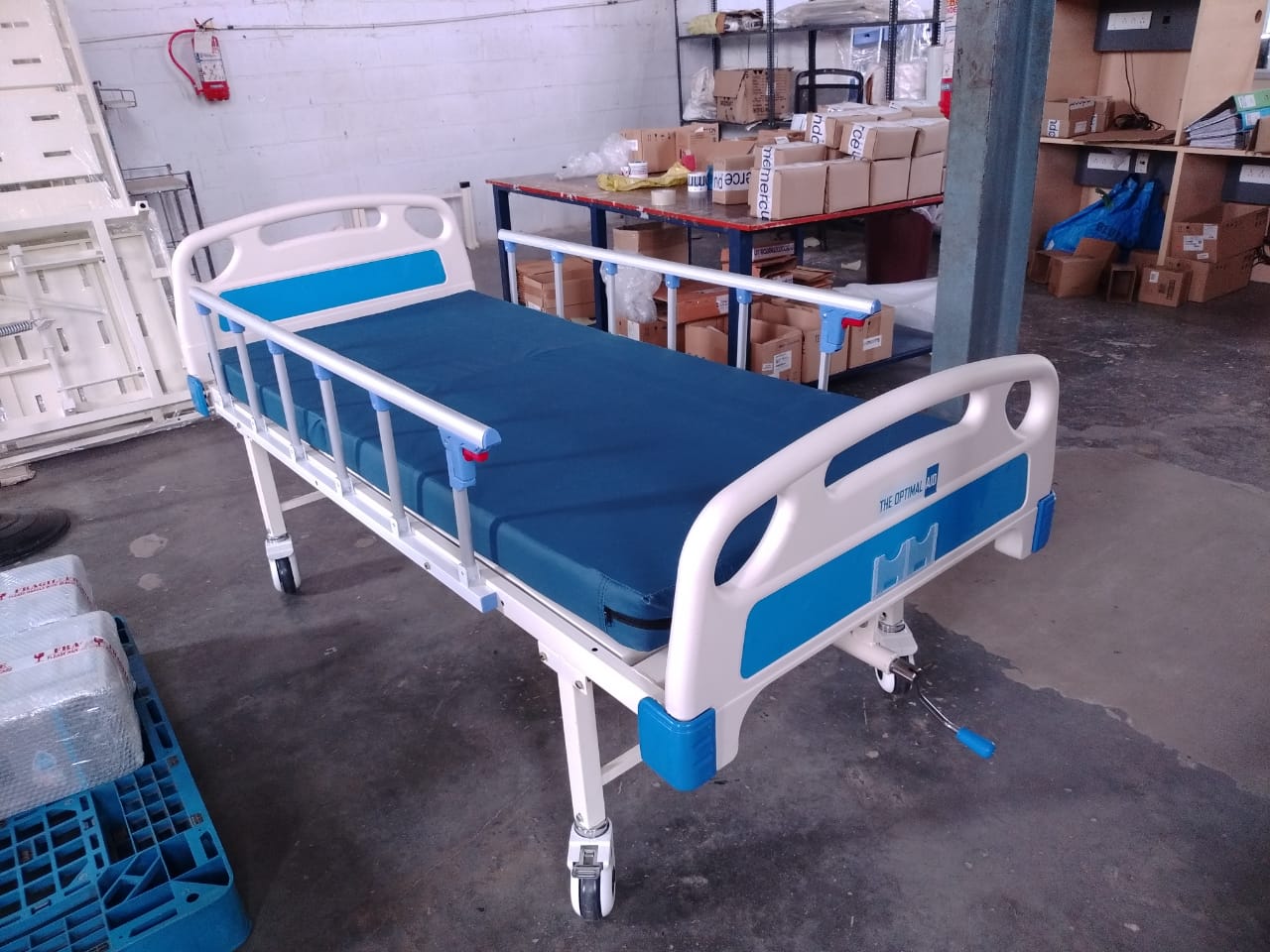 | Hospital Furniture Semi Fowler Deluxe (Manual) Bed – User Manual In Chennai 🔧 1. View product → |
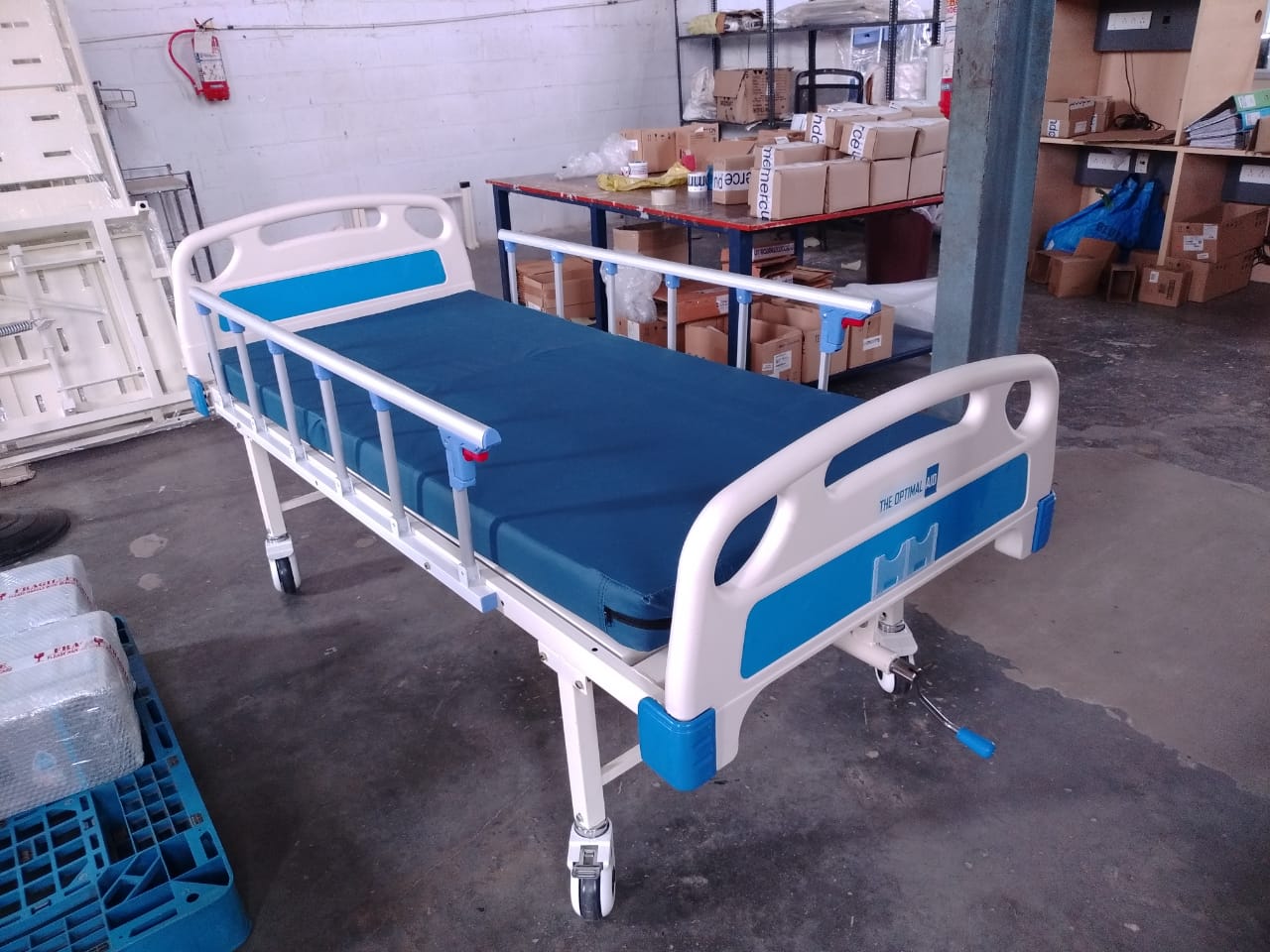 | Cot Series Semi Flowler Cot Deluxe Wheel Leg Manual Semi Flowler Cot Deluxe Wheel Leg Manual In Chennai. We wre one of the Leading and best quality manufacturer of Hospital Furniture In chennai and we... View product → |
Frequently asked questions
How often should you inspect a manual hospital bed?
Use three inspection levels: before each shift, weekly and monthly. Follow the manufacturer’s instructions for use for service intervals and lubrication points.
How do you clean a manual hospital bed without damaging it?
Use only cleaners approved in the bed’s IFU, follow the stated dilution and contact time, and prevent liquid from entering the crank, joints or other moving parts.
What should you test before placing a patient in a bed?
Operate the crank and backrest through their movement, confirm that side rails latch securely, and check that the bed remains stable on the ward floor.
What should you do when a hospital bed fails inspection?
Remove it from patient use, attach a clear out-of-service tag, report the fault and keep a traceable record of the inspection, repair and replacement parts.
Keywords