
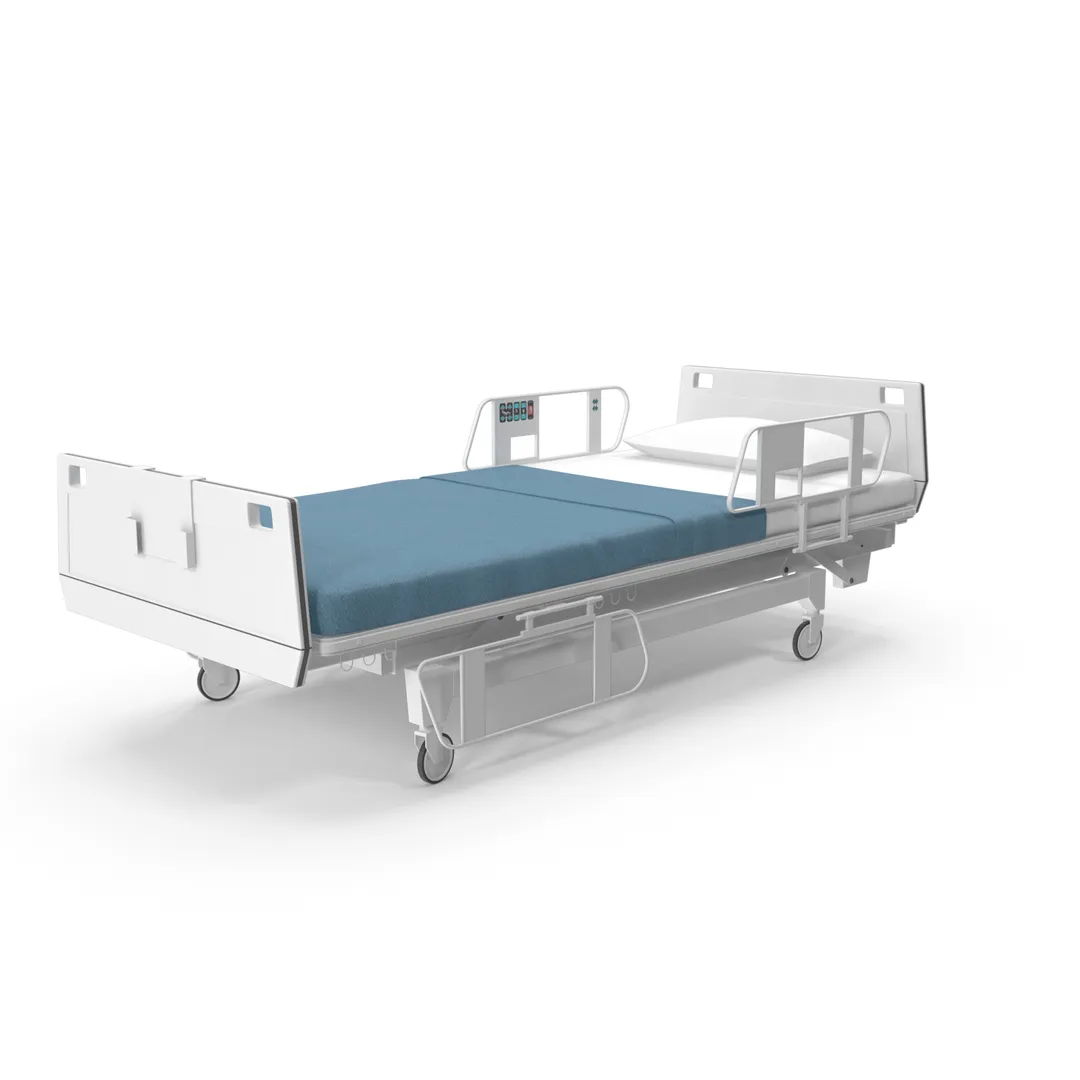
Hospital beds may appear similar at first glance, but the functional requirements of a general ward and an intensive care unit are very different. Understanding these differences helps healthcare administrators avoid paying for unnecessary features while ensuring critical-care areas receive appropriate equipment.
Facilities comparing ICU beds in Chennai with standard hospital beds should begin by looking at clinical workflow, patient dependency, positioning requirements, and caregiver access.
Standard Hospital Beds
Standard beds are commonly used in general wards, recovery areas, nursing facilities, and other environments where patients do not require continuous critical-care intervention.
Depending on the model, they may provide manual or powered adjustment for the backrest, leg section, or bed height.
Their advantages can include:
- Straightforward operation
- Practical construction
- Suitability for routine inpatient care
- Lower complexity
- Easier maintenance on basic models
For many general-care environments, these characteristics are sufficient.
What Makes an ICU Bed Different?
Critical-care patients may require frequent repositioning, closer monitoring, multiple devices, and rapid access by medical personnel.
ICU beds can therefore incorporate additional adjustment and positioning capabilities. Depending on design and specification, features may include electric controls, height adjustment, backrest and knee-rest movement, specialized positioning functions, side rails, accessory provisions, and more advanced castor systems.
The key difference is not simply that an ICU bed has more functions. Those functions are intended to support the intensive workflow surrounding highly dependent patients.
Which Bed Should a Facility Choose?
Use the clinical environment as the deciding factor.
A standard hospital bed may be appropriate when:
- Patients have relatively stable care requirements
- Advanced positioning is not routinely needed
- The bed will primarily serve general wards
- Simpler operation is preferred
An ICU bed may be more appropriate when:
- Frequent positioning is part of patient management
- Staff require greater access around the patient
- Multiple accessories or devices may be used
- Mobility and braking performance are especially important
- Critical-care workflows demand greater adjustability
Evaluate Total Operational Requirements
Price alone gives an incomplete comparison. Healthcare facilities should also consider maintenance, electrical infrastructure for powered beds, staff familiarity, mattress compatibility, replacement components, and expected utilization.
This is particularly relevant in Chennai, where hospitals across Tamil Nadu range from smaller nursing facilities to large multispeciality institutions with dedicated critical-care departments.
Optimal Aid India manufactures hospital furniture including beds intended for different levels of healthcare use.
Before procurement, categorize the number of beds required for general wards, high-dependency areas, recovery spaces, and ICUs separately. Doing so prevents over-specification in routine areas and under-specification where advanced functionality is genuinely required.
The best bed is therefore not automatically the model with the longest feature list. It is the one whose construction and functionality appropriately match the patients, staff, and clinical environment it is expected to support.
Keywords