

A manual hospital bed can make daily care safer than a standard cot, but only if the room, mattress, wheels, rails and metal finish suit Chennai’s wet season. By the end, you will know how to measure the home, position and maintain the bed, operate its moving parts, and verify the specifications before delivery.
Key takeaways
- Choose a manual bed for assisted transfers and care without mains electricity.
- Keep the bed away from leaks, damp walls, windows and condensation.
- Lock castors before transfers and use side rails only when appropriate.
- Check the frame, mattress platform, finish, warranty and service contact before acceptance.
Decide whether a manual hospital bed suits the patient and the room
Choose a manual bed when the patient needs assisted transfers, a raised working height, a backrest for eating or breathing, and occasional repositioning without depending on mains electricity.
It is a better hospital bed for home care in Chennai than a standard cot when caregivers must work safely around the patient rather than lift from floor-level bedding.
| Option | Limitation | Better choice when |
|---|---|---|
| Standard cot | Fixed height, no controlled backrest, and difficult transfers | The patient is independent and needs ordinary sleeping support |
| Recliner | Supports sitting but not overnight positioning, turning, or care access | The patient spends short periods sitting and transfers easily |
| Manual hospital bed | Requires a caregiver to operate cranks or levers | Care needs positioning, side-rail support, and reliable function during power cuts |
| Electric profiling bed | Costs more and adds motor, control, and maintenance points | The patient needs frequent independent or caregiver-adjusted profiling |
Do not choose manual operation if the caregiver cannot reach or turn the adjustment controls, lacks the strength to use them, or must reposition the patient repeatedly through the night. In that situation, an electric profiling bed can reduce strain and missed position changes.
Treat the castors as a transfer-safety feature, not just a mobility feature. They must roll across the home’s thresholds without excessive force, lock firmly on the installed floor, and keep the frame still while the patient moves.
Confirm the safe working load, not merely the patient weight. It must include the mattress, caregiver leaning on the frame, side rails, IV pole, and other mounted accessories.
Measure the home and choose a dry, serviceable bed position
Before delivery, measure the bed’s full external length and width, not only the mattress area. For manual hospital bed home care during monsoon in Chennai, record the narrowest doorway, corridor and turning point from the entrance to the room.
Confirm these measurements before booking:
- Door clear opening with the door fully folded back
- Corridor width and the smallest turning circle
- Threshold height, including bathroom lips and floor-level door tracks
- Space beside both bed sides for transfers and caregiver access
- Mattress-platform length and width, then order a mattress to those exact usable dimensions
- Bed height at its lowest and highest settings
- Route to a dry storage point if the bed arrives before installation
A raised platform will not protect the bed if floodwater enters. Reject a position beside a balcony door, leaking window, damp external wall, air-conditioner drain or wall showing peeling paint, salt deposits or mould. Leave enough clearance to wipe the frame and inspect castors without trapping the bed against furniture.
| Position | Confirm | Reject when |
|---|---|---|
| Interior wall | Dry wall, clear access, ventilation and no pipe leaks | Condensation or mould remains after cleaning |
| Window or balcony side | Rain cannot blow in and the sill drains correctly | Water reaches the floor or mattress |
| Low threshold route | Castors cross without force and brakes hold on the installed floor | The bed rocks, catches or rolls during transfer |
Keep the bed away from pooled water, and test every castor over the actual thresholds before the patient uses it. Dry wet floors first.
Use the backrest, side rails and castors without creating transfer hazards
Raise the backrest with the supplied crank, turning it slowly while the patient’s arms, clothing and tubing stay clear of the moving joints. Stop if the handle binds or the frame twists; forcing it can strip the mechanism.
For a semi-Fowler bed during monsoon, keep the patient’s head and chest elevated only as prescribed, then lower the backrest as far as practical before a side transfer.
- Before repositioning, explain the movement, place the bed at its lowest safe height, and lock every castor. Push the mattress lightly to confirm the bed does not roll.
- Lower the rail on the transfer side before the patient moves. Do not make a weak or confused patient climb over it, and do not use a rail as a grab bar unless it is designed for that purpose.
- Raise a rail only after checking that its latch has engaged and that the patient’s limbs, clothing and oxygen tubing are clear. Match the rail to the exact mattress thickness; an undersized mattress can leave dangerous gaps.
- Unlock the castors only when the bed is empty or the patient is secured for a planned move. Push across a threshold rather than pulling sideways, and stop if a wheel catches on a wet floor.
- After moving, apply every brake and test the bed from both sides. Never rely on a raised platform to protect against floodwater or a slick floor.
Keep the crank, hinges and castor housings dry after cleaning. Report a brake that slips, a rail that will not latch, or a wheel that needs excessive force before the next transfer.
Control moisture, rust and mattress contamination through the wet season
During Chennai’s October-to-December northeast monsoon, humidity can keep a bed frame, mattress cover and floor damp long after rain stops. Treat every wetting event as a drying and inspection task, not merely a housekeeping issue.
Keep the bed away from leaking windows, damp walls, bathroom routes and condensation-prone surfaces. Use a level floor, keep all four castor brakes reachable, and move the bed before floodwater enters; a raised platform will not protect against contaminated water.
After each cleaning, follow this sequence:
- Wipe the frame, rails, joints and castors with a damp cloth rather than spraying liquid into mechanisms.
- Use only the disinfectant named in the manufacturer’s instructions, including its permitted concentration and contact time. Do not use abrasive powder, solvents or strong chlorine solutions unless the materials are approved for them.
- Rinse when instructed, then dry every metal surface, underside and wheel assembly before fitting bedding.
- Ventilate the room and do not cover a damp frame, because trapped moisture accelerates rust.
Order a mattress to the exact usable platform dimensions. An undersized mattress leaves gaps near the headboard, footboard or rails; an oversized one can obstruct backrest movement and split-rail operation. Keep its waterproof cover intact, clean spills promptly, and never saturate the mattress or place it directly on a wet floor.
Inspect welds, fasteners, plated parts and chipped paint after cleaning. Record corrosion early and arrange approved touch-up or replacement; rust beneath damaged coating spreads through humid air quickly. These checks are essential when choosing home care hospital furniture in Chennai.
Verify the specification, finish and service support before accepting delivery
Record the promised specification against what arrives. For a hospital bed for home care in Chennai, do not accept “hospital grade” or “monsoon-ready” as measurable evidence; obtain the figures and test results in writing.
- Safe working load in kilograms, including the patient, mattress, caregiver leaning on the frame, side rails, IV pole and other accessories
- Usable mattress-platform length and width in millimetres, matched to the mattress supplied
- Castor diameter, threshold performance, brake operation on your actual floor, and whether the locked bed moves during a transfer
- Full backrest and leg-section travel, plus the measured bed-height range
- Rail locking at every position, with no unintended release
- Frame, hardware and mattress-cover materials, visible paint or plating damage, and rust spots
- Permitted disinfectant, concentration, contact time, rinsing method and drying requirement
- Written warranty period, service response time for Chennai, contact number and spare-part availability
| Specification | Acceptance record | Reject or escalate when |
|---|---|---|
| Safe working load | Supplier’s rating in kg and your calculated loaded weight | Rating leaves no practical margin |
| Mattress fit | Platform and mattress dimensions in mm | A gap remains, or articulation is obstructed |
| Castors and brakes | Threshold test and stationary brake test | Excessive force is needed or wheels creep |
| Finish and cleaning | Coating condition and named chemical protocol | Chips, exposed steel or no compatible cleaner |
| Service support | Warranty, response time and parts source | Terms are verbal or service contact is missing |
Optimal Aid India can document these checks during installation, giving a manual hospital bed home care monsoon in Chennai a traceable acceptance record rather than a label.
Related products
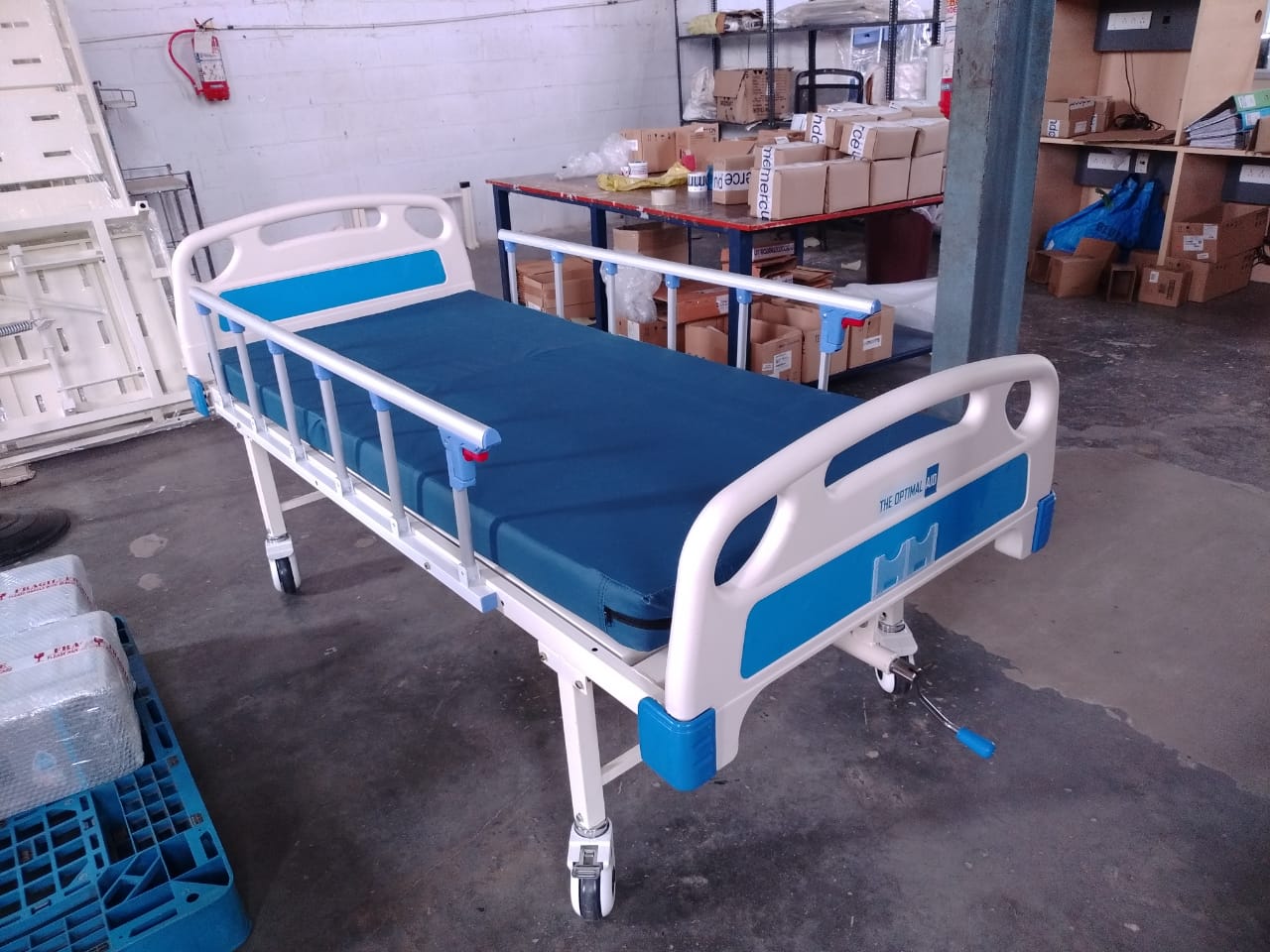 | Hospital Furniture Semi Fowler Deluxe (Manual) Bed – User Manual In Chennai 🔧 1. View product → |
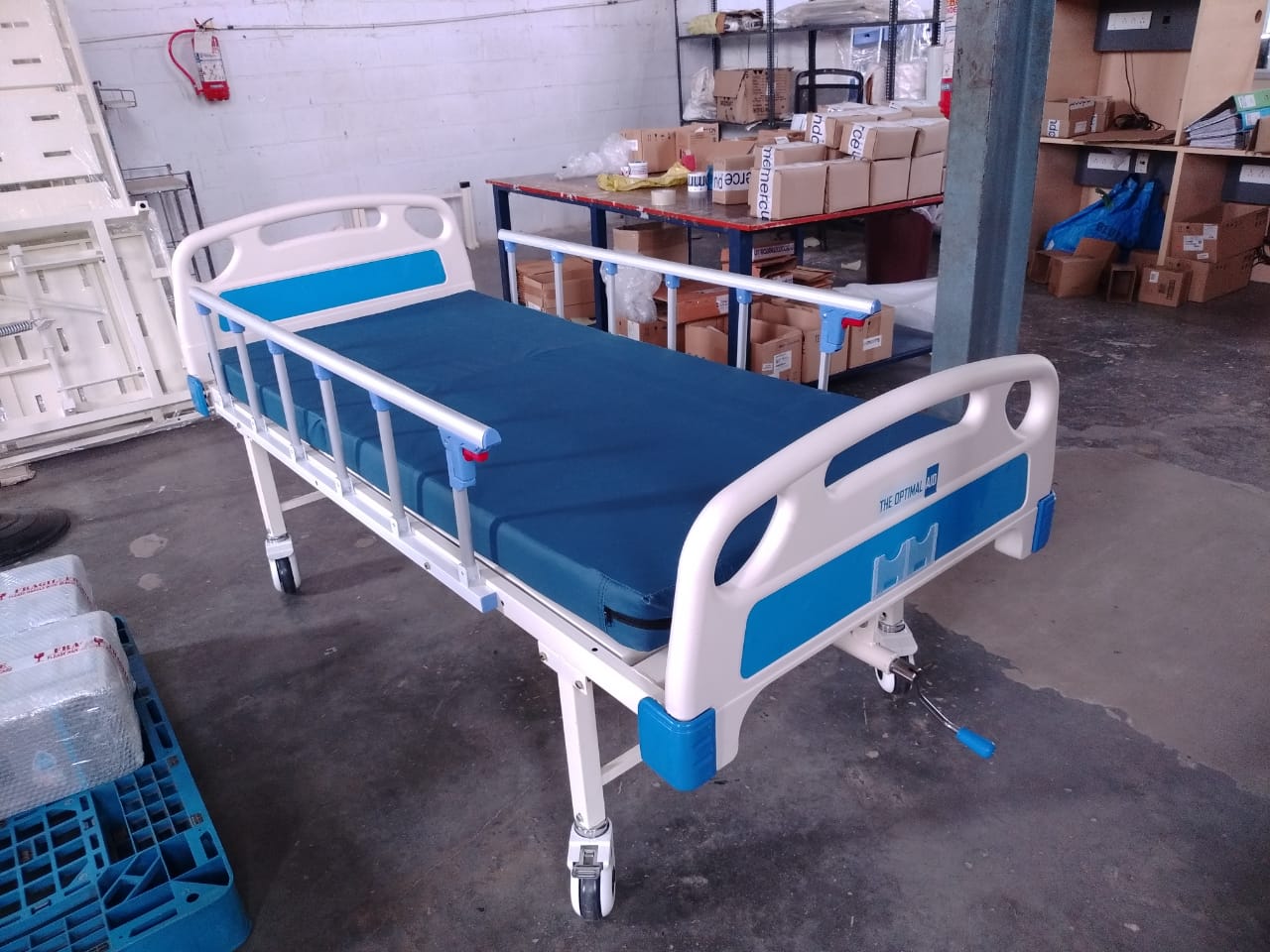 | Cot Series Semi Flowler Cot Deluxe Wheel Leg Manual Semi Flowler Cot Deluxe Wheel Leg Manual In Chennai. We wre one of the Leading and best quality manufacturer of Hospital Furniture In chennai and we... View product → |
Frequently asked questions
When does a manual hospital bed suit home care?
Choose one when the patient needs assisted transfers, raised working height, a backrest for eating or breathing, and occasional repositioning without relying on mains electricity.
Where should you position a hospital bed during Chennai monsoon?
Place it on a level, dry floor away from leaking roofs, damp walls, open windows, standing water and condensation. Leave enough clearance for transfers, cleaning and caregiver access.
How do you use castors and side rails safely?
Lock all castors before transfers or repositioning. Use side rails to reduce accidental rolling from bed, not as a substitute for supervision or a transfer plan, and check that they do not obstruct the patient or caregiver.
How can you protect a manual hospital bed from monsoon moisture?
Wipe spills promptly, dry the frame and joints, inspect exposed metal for rust, ventilate the room, and keep the mattress covered with a breathable waterproof protector that does not trap condensation.
What should you verify before accepting delivery?
Check the delivered model against the quotation, inspect welds, paint or powder coating, wheels, brakes, crank operation and mattress platform, then obtain the invoice, warranty terms, maintenance contact and replacement-part information.
Related product
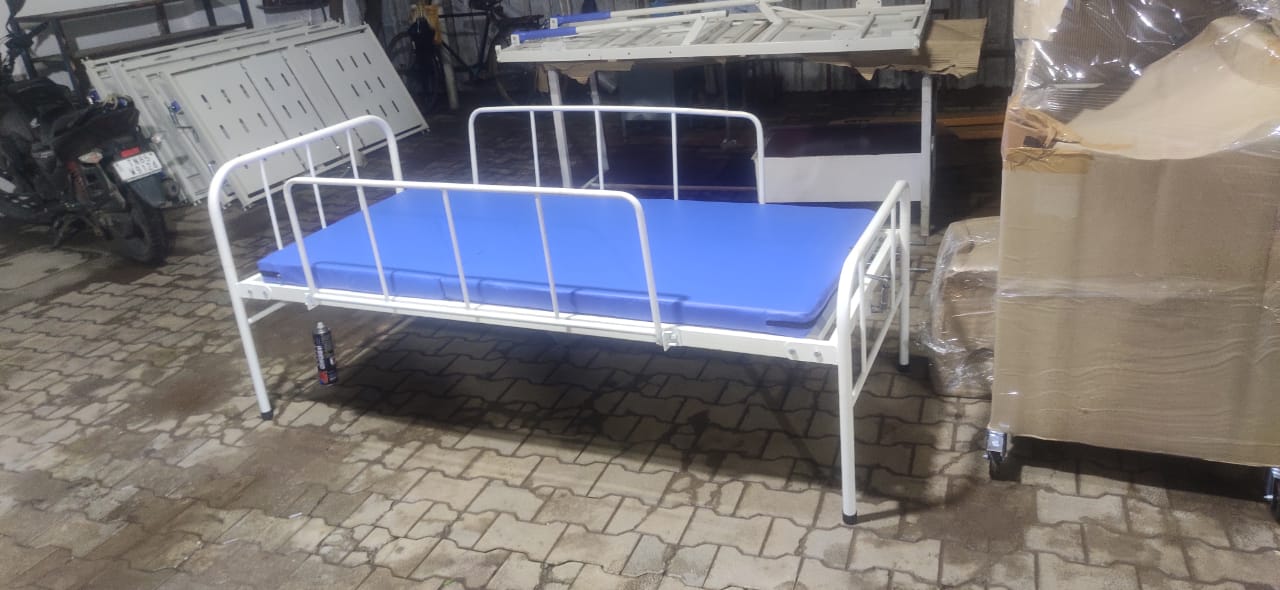 | Hospital Furniture Semi-Fowler Mattress It’s a 2-section (or foldable) medical mattress used on Semi-Fowler beds. View product → |
Keywords