
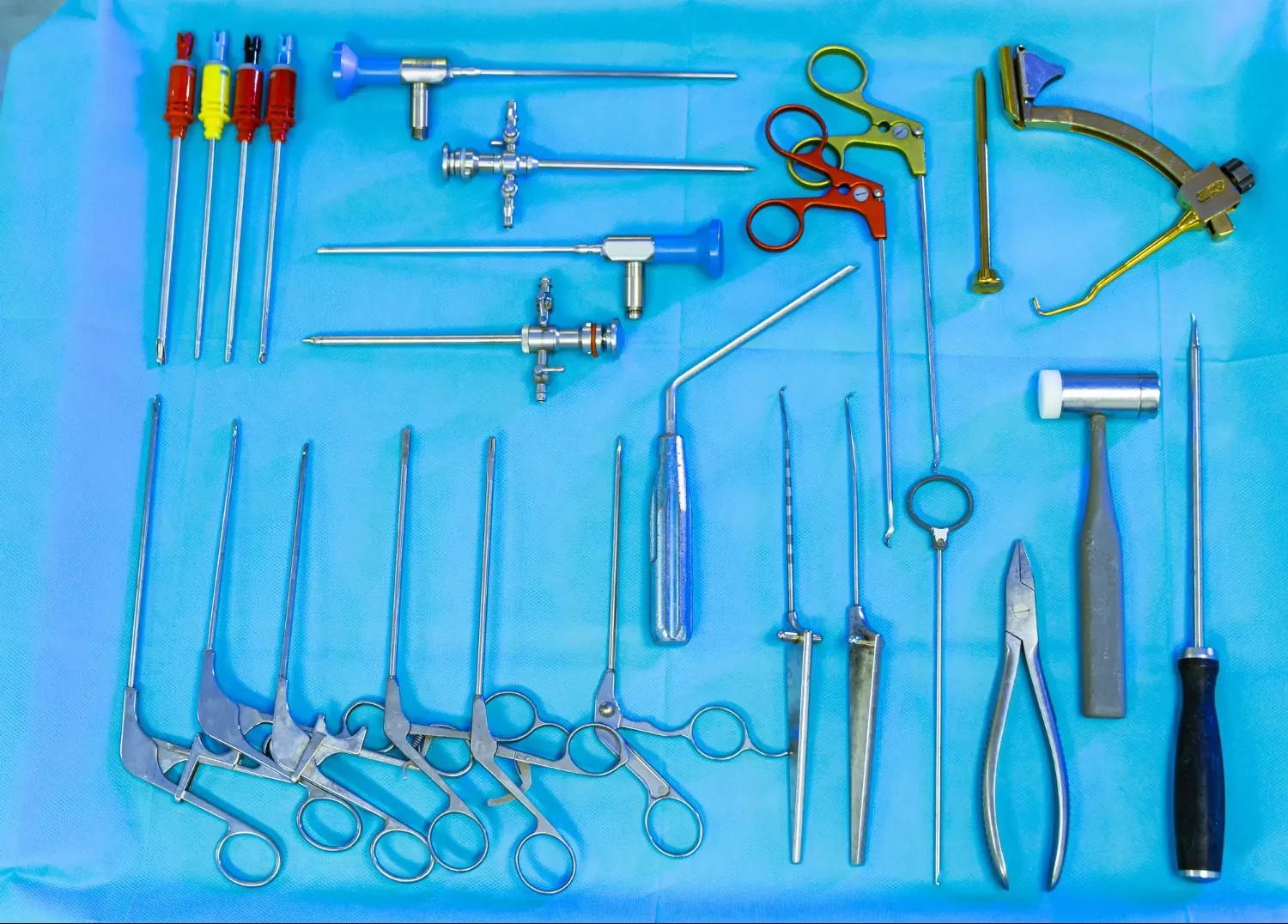
Surgical instruments are precision tools used repeatedly in demanding clinical environments. Selecting them requires more attention than simply matching an instrument name with a catalogue. Material quality, intended procedure, handling, cleaning, sterilization compatibility, and supply consistency can all influence procurement decisions.
Hospitals and surgical centres sourcing surgical instruments in Chennai should therefore use a structured evaluation process.
Define the Procedure First
Instrument requirements should be based on the procedures performed at the facility.
General surgery may require common forceps, scissors, retractors, clamps, and needle holders, while specialized departments can need different configurations and instrument profiles.
Creating procedure-specific sets makes procurement more organized and can reduce unnecessary purchasing.
Start by documenting:
- Procedure type
- Instrument name
- Size or configuration
- Quantity required per set
- Number of sets needed
- Sterilization cycle requirements
- Storage arrangements
This provides a clear specification for suppliers and internal teams.
Examine Construction and Finish
Surgical instruments are expected to tolerate repeated handling and reprocessing. Buyers should therefore assess construction quality carefully.
Look at alignment, joints, edges, locking mechanisms, gripping surfaces, and overall finish. Instruments should also be evaluated for the specific purpose for which they are intended rather than assuming that visually similar products are interchangeable.
Consider the Complete Instrument Lifecycle
Purchase price represents only one part of the instrument lifecycle.
A healthcare facility should also consider:
- Frequency of use
- Cleaning procedures
- Sterilization processes
- Inspection requirements
- Storage and organization
- Replacement planning
- Availability of matching instruments when sets need replenishment
Poorly organized replacement practices can leave instrument sets incomplete and disrupt theatre scheduling.
Standardization Can Simplify Procurement
Where clinically appropriate, standardizing commonly used instruments across departments can make inventory management easier. Staff become familiar with configurations, purchasing teams maintain clearer records, and replacements can be managed more systematically.
However, standardization should never override specific surgical requirements. Surgeons and theatre teams should be involved when selecting instruments for specialized procedures.
For healthcare facilities in Chennai and other parts of Tamil Nadu, local procurement also involves practical considerations such as order quantities, supply schedules, product availability, and coordination with other hospital-equipment purchases.
Optimal Aid India supplies healthcare products for institutional requirements, including surgical and hospital-use equipment categories.
Before finalizing a purchase, request clear product specifications and compare them against the clinical requirement list prepared by the theatre team. Avoid purchasing large sets solely because they appear comprehensive; unused instruments add cost and increase inventory without necessarily improving clinical workflow.
Effective surgical instrument procurement is based on precision in both senses of the word: precision in the instruments themselves and precision in defining what the facility actually needs. A carefully planned instrument inventory supports organized theatre preparation and more efficient long-term equipment management.
Keywords