Hospital trolleys often receive less attention than major medical equipment, yet they are used continuously throughout healthcare facilities. Medicines, instruments, supplies, linen, emergency items, and patient-care materials frequently need to move between rooms and departments. A suitable trolley makes that movement organized and manageable.
For hospitals and clinics evaluating hospital trolleys in Chennai, understanding the intended application is the first step toward choosing an appropriate design.
Different Tasks Require Different Trolleys
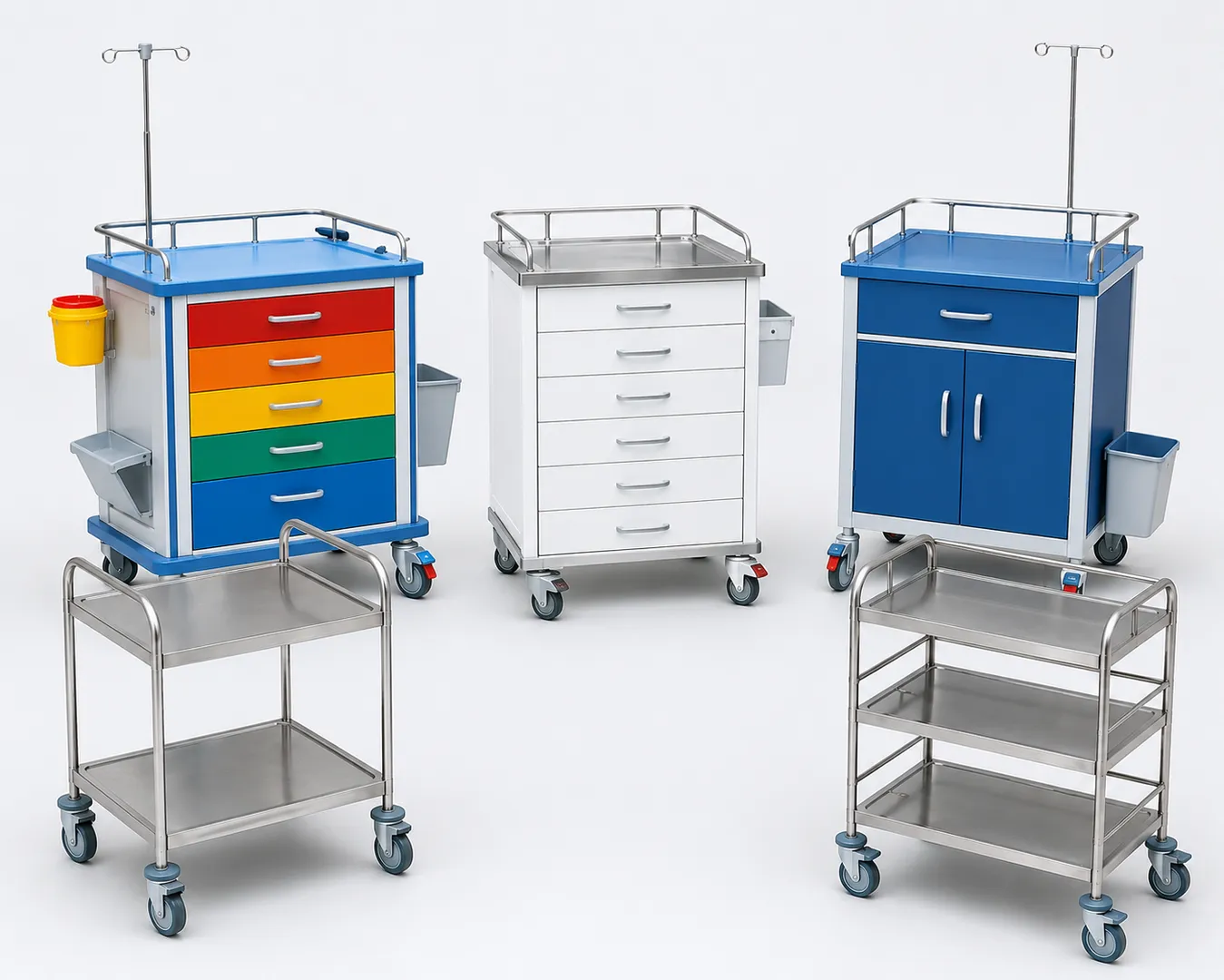
There is no single trolley suitable for every hospital department. Common types include:
- Instrument trolleys
- Medicine trolleys
- Dressing trolleys
- Emergency or crash carts
- Linen trolleys
- Food distribution trolleys
- Patient transfer trolleys
- Utility trolleys
The construction and configuration should correspond with the work being performed.
An instrument trolley, for instance, benefits from accessible surfaces and easy movement around clinical areas. A medicine trolley may require organized storage compartments. A patient transfer trolley has completely different requirements related to stability, positioning, and movement.
Mobility Is a Core Design Consideration
Castors are among the most important components of mobile hospital furniture. They need to support the trolley's intended load while allowing staff to maneuver it through wards, corridors, treatment rooms, and elevators.
Buyers should consider wheel movement, braking arrangements, trolley dimensions, handles, balance, and turning requirements.
A trolley that is difficult to maneuver can slow staff during routine work. Conversely, one that moves too freely without appropriate control may be unsuitable for certain applications.
Hygiene Cannot Be an Afterthought
Hospital environments require frequent cleaning, making surface design particularly important.
When assessing a trolley, look at:
- Accessibility of surfaces for cleaning
- Joints and corners
- Shelf construction
- Drawer arrangements where provided
- Handle design
- Material finish
- Resistance to routine institutional use
Simple, accessible construction can make housekeeping and maintenance easier.
Match the Trolley to the Department
Chennai has a broad healthcare network covering small clinics, nursing homes, diagnostic facilities, surgical centres, and large hospitals. The trolley requirements of these establishments across Tamil Nadu can vary considerably.
A procurement team should therefore avoid ordering identical trolley configurations for every department without evaluating actual usage.
Optimal Aid India manufactures hospital furniture and trolley solutions for different healthcare applications, allowing institutions to assess models based on workflow and departmental needs.
A useful selection process starts by observing the task itself. Determine what will be carried, expected load, travel distance, storage needs, cleaning frequency, and where the trolley will be parked when not in use.
Small details can make a significant operational difference. Appropriate dimensions, smooth mobility, stable construction, accessible shelves, and practical braking arrangements help hospital trolleys perform their intended role reliably throughout everyday healthcare operations.
Keywords