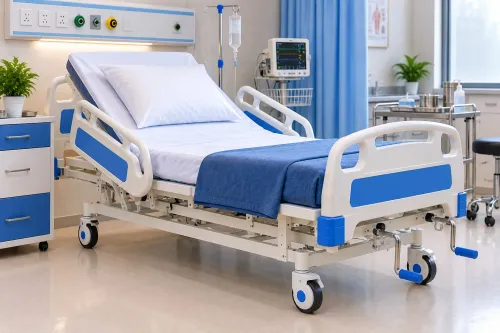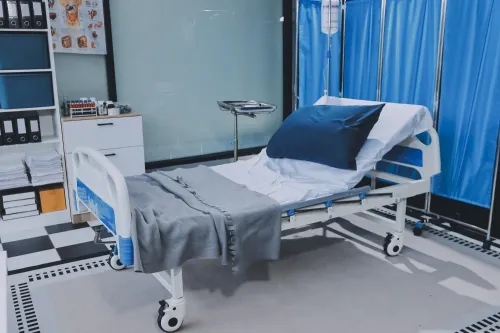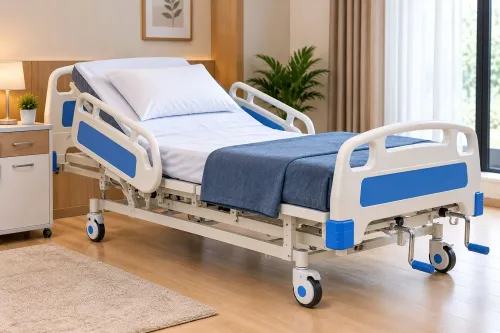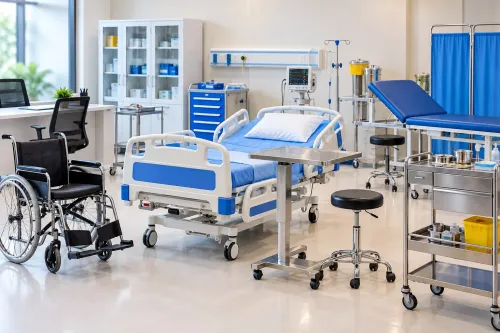
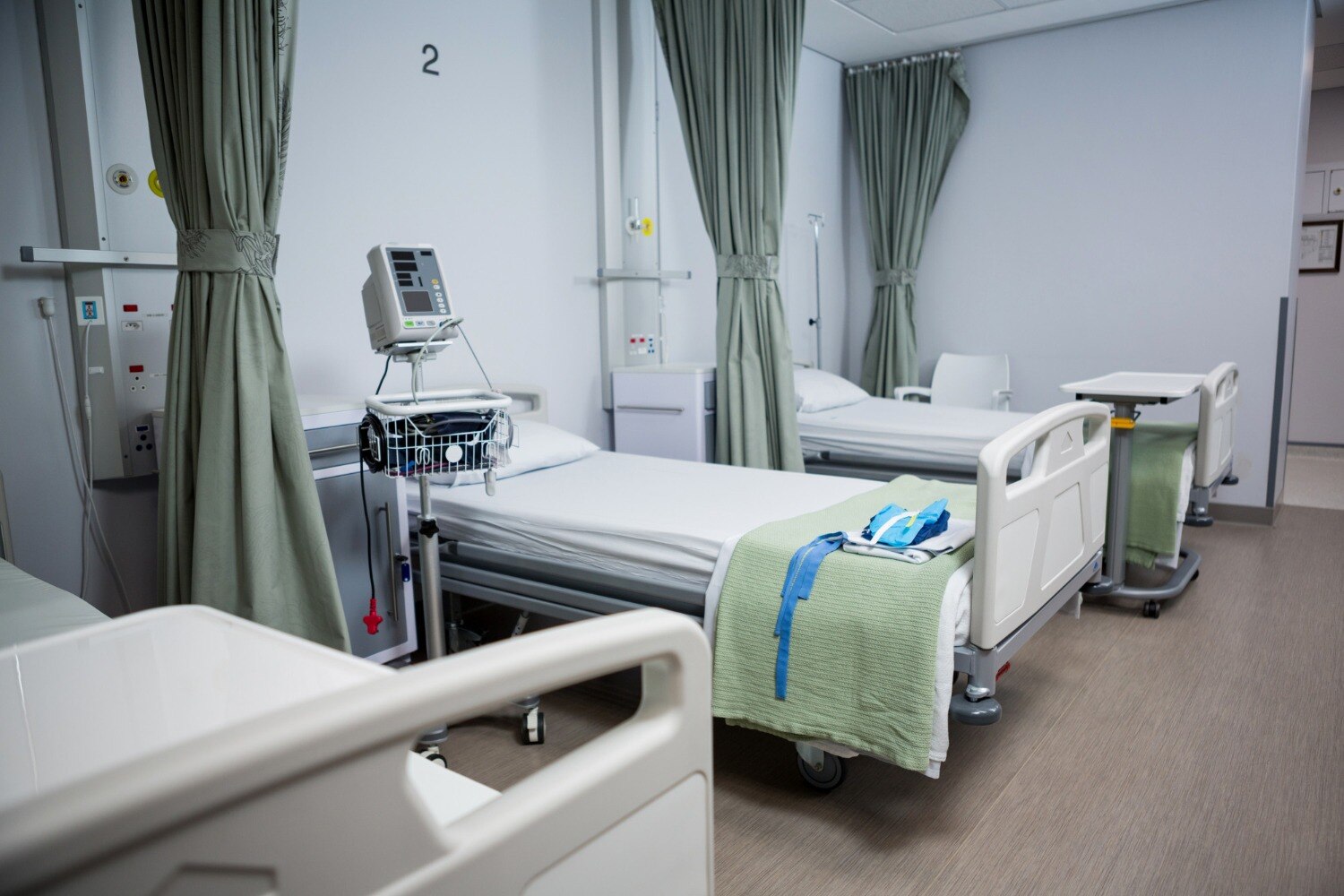
A manual backrest bed suits a particular kind of home patient: someone who benefits from upper-body elevation but does not need powered height adjustment, leg articulation, or repeated assisted transfers. By checking the patient’s mobility, clinical needs, room dimensions, route into the home, and caregiver capacity, you can decide whether a Semi-Fowler bed is practical or whether another bed type is safer.
Key takeaways
- Choose a Semi-Fowler bed when upper-torso elevation is the main care need.
- Confirm the room fits the bed, mattress, caregiver access and turning space.
- Ask for mattress dimensions, rail design, wheel locks and cleaning instructions.
- Choose a different bed if the patient needs leg elevation or powered adjustments.
Which home patients are suitable for a Semi-Fowler bed?
A semifowler hospital bed for home care in Chennai suits a patient whose main need is upper-torso elevation for feeding, reading, breathing comfort, clinician-prescribed reflux management, or easier repositioning. It fits best when a caregiver can make every adjustment and the patient does not need functions missing from a backrest-only frame.
| Bed category | More appropriate when |
|---|---|
| Semi-Fowler, manual | Backrest elevation is the main need and transfers are occasional |
| High-low or electric | Height changes, frequent bed-to-chair transfers, or caregiver ergonomics matter |
| Profiling or three-function | The patient needs a knee break, independent leg elevation, or post-operative positioning |
| ICU-style | Clinical monitoring, Trendelenburg, repeated wound care, or complex positioning is required |
| Bariatric | Patient weight or width exceeds the standard frame’s safe working load |
| Floor-level | Dementia, night-time falls, or severe fall risk makes a low platform important |
| Adjustable home-care bed | Several positioning and transfer needs must be adapted over time |
Respiratory disease, aspiration risk, severe reflux, post-operative restrictions, pressure-injury risk, dementia, and inability to reposition independently do not automatically make a Semi-Fowler bed suitable. Ask the treating clinician to set the safe backrest angle and positioning limits; the Semi-Fowler label does not establish a treatment angle.
Choose another home care hospital bed in Chennai when the patient needs hoist access, frequent transfers, powered height changes, clinical observation, repeated wound care, or independent leg elevation. A fixed-height manual bed also becomes unsuitable when its transfer height or caregiver-operated crank cannot be used safely.
A standard frame does not replace pressure-injury assessment, repositioning, skin checks, moisture control, or a suitable mattress.
What does a manual Semi-Fowler bed actually let you do?
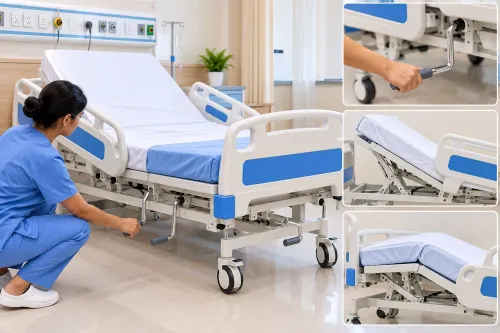
A manual Semi-Fowler bed lets you raise the patient’s upper torso, but its usefulness depends on the exact mechanism. Ask for the number of backrest positions, the minimum and maximum backrest angle, and whether adjustment is backrest-only or includes a separate knee break, leg-rest adjustment, Trendelenburg position, and height adjustment.
| Option | What it provides | Main limitation |
|---|---|---|
| Ordinary residential bed | Fixed sleeping surface | No clinical positioning or caregiver-friendly access |
| Backrest-only manual Semi-Fowler | Cranked upper-torso elevation | Not equivalent to a five-function or ICU bed; no independent legs, powered height, or full positioning |
| Two-function hospital bed | Usually backrest plus knee break, or another specified movement | Confirm which two functions are included |
| Three-function hospital bed | Three separately stated movements | Function names vary; do not rely on the label |
| Electric Fowler bed | Powered backrest movement, often hand-control operation | Requires electricity and still may lack height or leg adjustment |
| Floor-level or adjustable home-care bed | Lower fall height or adaptable transfer height | Costs more space, complexity, or transfer compromise depending on design |
Test the crank with the mattress and intended user load. Check whether the caregiver must stand beside the bed, whether the handle is reachable from both sides, how many turns reach each position, and whether it binds under load. A caregiver with limited grip or shoulder strength may not operate it safely.
Manual operation keeps a manual bed for elderly home care usable during power cuts, but removes independent positioning.
For a semifowler bed for home use, fixed platform height matters: a high surface challenges short users, while a low surface strains weak knees and hips during standing. Frequent transfers favour a height-adjustable bed; backrest-only movement does not make a five-function or ICU bed.
Will the bed fit, move, and stay stable in a Chennai home?
A bed is suitable only if it reaches the room, fits beside the toilet, and remains stable during transfers. Measure the route before ordering a home care hospital bed in Chennai; an advertised load rating does not make an oversized frame usable.
1. Record the bed’s overall length and width, frame width, mattress-platform height, and the clear width of the entrance and bedroom doors. Measure lift-door and cabin dimensions, stair width, landings, turning radius, ceiling height, stair headroom, floor-level changes, thresholds, and uneven tiled sections.
2. Mark the intended position beside the toilet and reserve space for the crank, caregiver standing, transfers, cleaning, and access to all four sides where possible. A bed that blocks the only transfer side can be unsafe even when it fits physically.
3. Obtain the number of castors, castor diameter, individual wheel locks, and the manufacturer’s stated limit for thresholds or uneven floors. Lock every castor before an elderly user sits, stands, or pulls on a rail; never let the frame roll while the user pushes against the mattress.
4. Confirm whether the castors are for room cleaning only or for occupied transport. Never move a patient in the bed unless the manufacturer expressly permits it and a trained caregiver can control the route.
5. Ask whether the safe working load includes the patient, mattress, bedding, accessories, and dynamic forces from abrupt sitting or rail use. A patient-weight figure alone is not an adequate margin.
A manual bed without reliable brakes is a poor choice for frequent transfers. Clearance and stability matter more than getting the frame through the door.
How do mattress, rails, and hygiene affect suitability?
The bed, mattress, and side rails form one safety system. A frame that is safe when empty can become hazardous after you fit the wrong mattress or add rails.
1. Obtain the permitted mattress length, width, thickness, shape, maximum user weight, and rail compatibility before replacing the supplied mattress. A mattress that is too thin can enlarge rail gaps; one that is too soft can increase sliding; one that is too thick can reduce rail protection.
A stiff mattress that cannot flex with the raised backrest can create shear, a gap at the back section, or a crank that binds under load.
2. Treat pressure-injury prevention as a care plan, not a bed feature. Risk assessment, repositioning, skin inspection, moisture control, adequate nutrition, and a suitable pressure-redistributing mattress still matter. A standard Semi-Fowler frame does not make a static foam mattress suitable for someone already assessed as high risk.
3. Fit rails only after individual assessment. They can provide a handhold, but a person with dementia, agitation, or poor judgment may climb over one, fall from it, or become entrapped. Ask a clinician to assess the user rather than installing rails automatically.
4. Choose fluid-resistant, removable covers and smooth, sealed surfaces. Reject open seams, exposed foam, and unsealed plywood. Confirm disinfectant compatibility, wipe spills promptly, and keep moisture out of steel joints, casters, and crank mechanisms; Chennai’s humidity, coastal air, perspiration, and wet cleaning accelerate corrosion and damage lubrication.
What should you verify before ordering a Semi-Fowler bed in Chennai?
Ask for a written specification, not “a standard model.” For semifowler hospital beds for home care in chennai, verify:
1. Backrest positions and minimum/maximum angle; whether it has only backrest movement or also knee, leg, or height adjustment. Record crank reach, turns, effort, binding under load, and operation from each side.
2. Actual mattress-platform height, castor diameter and individual locks, frame width, and the safe working load definition. Confirm that the load includes patient, mattress, bedding, rails, accessories, and movement forces.
3. Mattress length, width, thickness, flexibility, maximum user weight, and rail compatibility. A mismatched mattress creates gaps, sliding, shear, or difficult adjustment.
4. Cleaning chemicals approved for the finish, removable fluid-resistant cover requirements, drainage-free cleaning, corrosion protection, and inspection points around casters, fasteners, bearings, and crank mechanisms. Chennai’s coastal air, humidity, perspiration, and wet cleaning make sealed or protected components and lubrication points important.
5. Warranty duration and exclusions, spare-parts availability, lubrication instructions, and who performs maintenance. Ask Optimal Aid India for the exact model specification, demonstration, mattress limits, castor details, and after-sales terms; treat the answers as due diligence.
Request a demonstration with the intended caregiver. Measure the entrance, doors, lift or stairs, turns, floor changes, and bedside clearance, then test transfer height with the patient’s footwear and usual chair.
A semifowler bed for home use suits backrest elevation as the main need and dependable caregiver support. Choose a height-adjustable, profiling, bariatric, ICU, or floor-level model when the checklist exposes a mismatch.
Related products
 | Hospital Furniture Semi Fowler Deluxe (Manual) Bed – User Manual In Chennai 🔧 1. View product → |
 | Hospital Furniture Semi-Fowler Mattress It’s a 2-section (or foldable) medical mattress used on Semi-Fowler beds. View product → |
Frequently asked questions
Which home patients are suitable for a Semi-Fowler bed?
It suits patients who need upper-torso elevation for feeding, reading, breathing comfort, prescribed reflux management or repositioning, provided a caregiver can adjust the bed.
What does a manual Semi-Fowler bed let you do?
A manual model lets a caregiver raise and lower the backrest. It does not automatically provide powered adjustment, leg elevation or other functions absent from the frame.
Will a Semi-Fowler bed fit and remain stable in a Chennai home?
Measure doorways, corridors, lift access and the intended room, then check caregiver clearance. Lockable castors and a level floor help keep the bed stable.
How do the mattress, rails and hygiene affect suitability?
Match the mattress to the frame dimensions, choose rails that reduce falls without blocking care, and confirm that surfaces and removable parts can be cleaned.
What should you verify before ordering a Semi-Fowler bed in Chennai?
Verify the overall dimensions, folded or delivered dimensions, adjustment method, mattress size, rail configuration, castor locks, load rating, warranty, delivery access and cleaning instructions.
Related product
 | Cot Series Semi Flowler Cot Deluxe Wheel Leg Manual Semi Flowler Cot Deluxe Wheel Leg Manual In Chennai. We wre one of the Leading and best quality manufacturer of Hospital Furniture In chennai and we... View product → |
Keywords