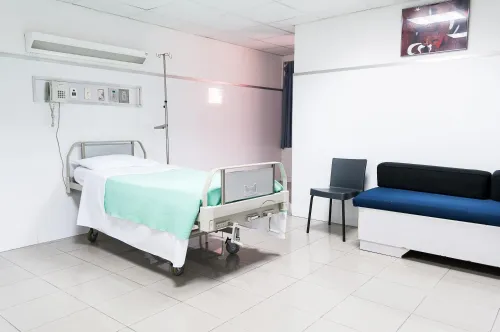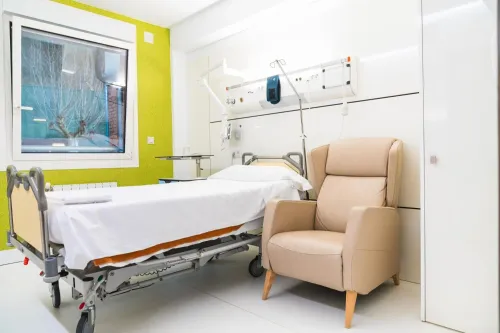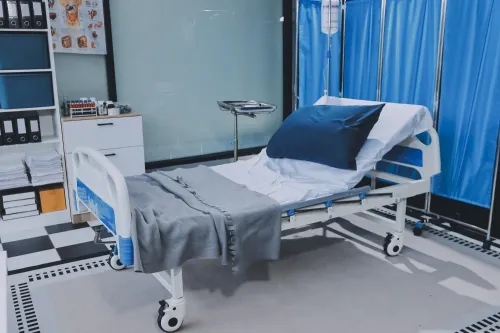

Chennai hospitals need beds that support safe positioning, quick bedside access and dependable operation when staffing, space, humidity and power supply vary. By the end, you will be able to match a Semi-Fowler manual bed to care tasks, compare it with other bed types and write a specification that exposes unsafe gaps before purchase.
Key takeaways
- Use backrest elevation for feeding, examinations, breathing comfort and repositioning.
- Choose manual adjustment when power failures and repair simplicity outweigh adjustment speed.
- Specify load rating, backrest range, rail design, mattress fit and corrosion protection.
- Check cranks, castors, fasteners and mattress condition during scheduled maintenance rounds.
Use the backrest to solve everyday bedside care problems
A Semi-Fowler manual bed helps staff manage routine bedside care by providing controlled torso elevation without lifting the patient’s upper body by hand. A crank or mechanical linkage moves the backrest, so staff can position a patient during a power failure.
The trade-off is slower adjustment and the need to reach the crank without striking the patient or blocking cleaning.
Use the backrest to:
- Raise the torso to about 30–45 degrees for feeding, when the patient’s assessment supports that position.
- Improve respiratory comfort for a patient who breathes more easily upright.
- Give clinicians better access for examination and routine nursing care.
- Reduce repeated manual repositioning during a bedside round.
- Lower the backrest towards a flatter position when preparing for a transfer or care task, following the patient’s mobility plan.
- Pair positioning with an appropriate mattress and skin checks; elevation alone does not prevent pressure injury.
These are practical semifowler medical furniture benefits, not automatic clinical outcomes. A patient at risk of sliding, falling, aspiration or pressure injury needs an individual positioning decision before staff raise the backrest. Staff must also check that side rails do not obstruct transfer or create an entrapment gap.
For wards with routine care demands, mechanical adjustment offers hospital furniture care solutions with little dependence on electricity, provided staff can operate the crank safely and consistently.
Choose manual adjustment when reliability matters more than speed
A Semi-Fowler manual bed is the better choice when patients need a controlled 30–45° backrest position, but staff do not need rapid, repeated electronic repositioning. A crank or mechanical linkage continues to work during a power failure, and simpler construction can reduce actuator faults and maintenance points. The price is slower adjustment and staff effort.
| Option | Main advantage | When it is the better choice |
|---|---|---|
| Flat manual bed | Lowest mechanical complexity | Patients who remain supine and need no routine upper-body elevation |
| Semi-Fowler manual bed | 30–45° backrest control without electricity | Stable wards, routine admissions, feeding, examinations and recovery care |
| Fowler bed | Higher upper-body elevation | Patients requiring a more upright position under clinical direction |
| Semi-electric bed | Faster powered backrest or height adjustment | Units where staff frequently reposition patients but still accept some manual work |
| Fully electric bed | Fast, centralised positioning | High-acuity care, frequent transfers, heavier patients or limited staffing |
The case for manual hospital furniture for hospitals is strongest where staffing is stable, positions are predictable and local maintenance access matters more than speed. Choose an electric model for rapid escalation, frequent height changes or patients who cannot tolerate delays; do not use a manual bed to solve a high-acuity workflow problem.
Ask for conformity evidence to IEC 60601-2-52, including assessment of stability, entrapment and mechanical hazards, rather than accepting a general electrical-safety certificate. Raise the backrest only within the patient’s care plan.
Turn “deluxe” into measurable purchasing specifications
Record exact numbers, not the word “deluxe.” A tender labelled “semifowler deluxe manual for medical furniture hospitals in chennai” should state mattress-platform length and width, overall bed length and width, lowest and highest platform height, under-bed clearance, castor diameter, safe working load, and maximum patient weight.
Ask each bidder to complete the same specification schedule:
- Backrest adjustment: angle range, crank position, locking method and number of crank turns.
- Leg section: fixed or manually adjustable, angle range and linkage.
- Mobility: castor diameter, swivel arrangement, individual brakes and central braking, if offered.
- Safety and accessories: side-rail type and working height, IV-pole sockets, drainage-bag hooks and mattress retainers.
- Load data: safe working load, patient-weight limit and the load used for stability testing. Do not treat these figures as interchangeable.
- Mattress platform: four-section or two-section construction, compatible mattress thickness, and the gap measurements around rails.
| Specification | What to record | Why it matters |
|---|---|---|
| Backrest | Angle range and manual control location | A short crank or obstructed handle slows care and can strike the patient. |
| Bed frame | Platform and overall dimensions | The bed must fit rooms, lifts, doorways and the intended mattress. |
| Compliance | Evidence against IEC 60601-2-52, applicable edition | A general electrical certificate does not prove bed entrapment or stability assessment. |
| Service parts | Castors, brakes, cranks and rails; lead time | One unavailable part can remove the bed from service. |
Include cleaning instructions, warranty exclusions and repair response time in the purchase order.
Control positioning, rail and mattress risks at the bedside
Raise the backrest for feeding, respiratory comfort or bedside examination only after checking whether the patient can tolerate the position. Upright positioning can reduce repeated lifting and improve clinical access, but it does not replace an individual assessment for sliding, falls, aspiration or pressure injury.
Lower the backrest for transfers and care that require a stable, flatter surface.
Use the bedside controls in this order:
- Set the backrest gradually, keeping the patient aligned and watching for sliding, pain, breathlessness or coughing.
- Lower the backrest and side rails before a transfer; never ask a patient to climb over a raised rail.
- Use a rail only after a patient-specific risk assessment, not as automatic fall prevention.
- Check that the mattress, rail, headboard and footboard form the manufacturer-validated combination, with no gap that could trap a head, neck, chest or limb.
A replacement mattress must fit the platform without bunching or leaving exposed gaps, and its compression, fire performance, cleanability and compatibility with backrest movement and rails require verification. Inspect heels, sacrum, elbows and other vulnerable skin during rounds; the bed alone cannot prevent pressure injuries.
These controls turn semifowler medical furniture benefits into safer hospital furniture care solutions, provided staff document positioning decisions and escalate aspiration or skin concerns to the clinical team.
Buy for maintenance, corrosion control and local support
A low purchase price is not the lowest ownership cost. For manual hospital furniture for hospitals, calculate the five-year cost of delivery, installation, cleaning, inspections, replacement parts, repairs and bed downtime. A crank that needs replacement twice, or a missing castor that immobilises a bed, can erase the initial saving.
Put these items in the tender and obtain written answers:
- Stock and lead time for castors, brake parts, crank assemblies, side-rail components and compatible mattresses
- Warranty period, exclusions, inspection schedule and repair response time
- Cleaning agents, dilution ratios and drying instructions approved for the frame, rails and mattress cover
- On-site installation, user training and escalation contact in Chennai
- Evidence of conformity to the applicable edition of IEC 60601-2-52; a general electrical-safety certificate does not prove that bed entrapment, stability and mechanical hazards were assessed
Inspect a sample before ordering. Look beneath the frame, around welds, at castor mounts and on crank hardware for coating gaps, trapped moisture and exposed fasteners. Chennai’s humid, saline air and wet cleaning punish vague “rust-proof” claims, so specify the steel grade or coating system and record how damage will be repaired.
| Supplier evidence | What it tells you | Warning sign |
|---|---|---|
| Local parts stock | Shorter downtime | Every part is imported to order |
| Written service SLA | Predictable repairs | “Quick support” without hours |
| Training record | Safer crank and rail use | Handover ends at delivery |
Optimal Aid India becomes a stronger choice only when it can document these service, parts and corrosion-control details—not merely offer a competitive quote.
Related products
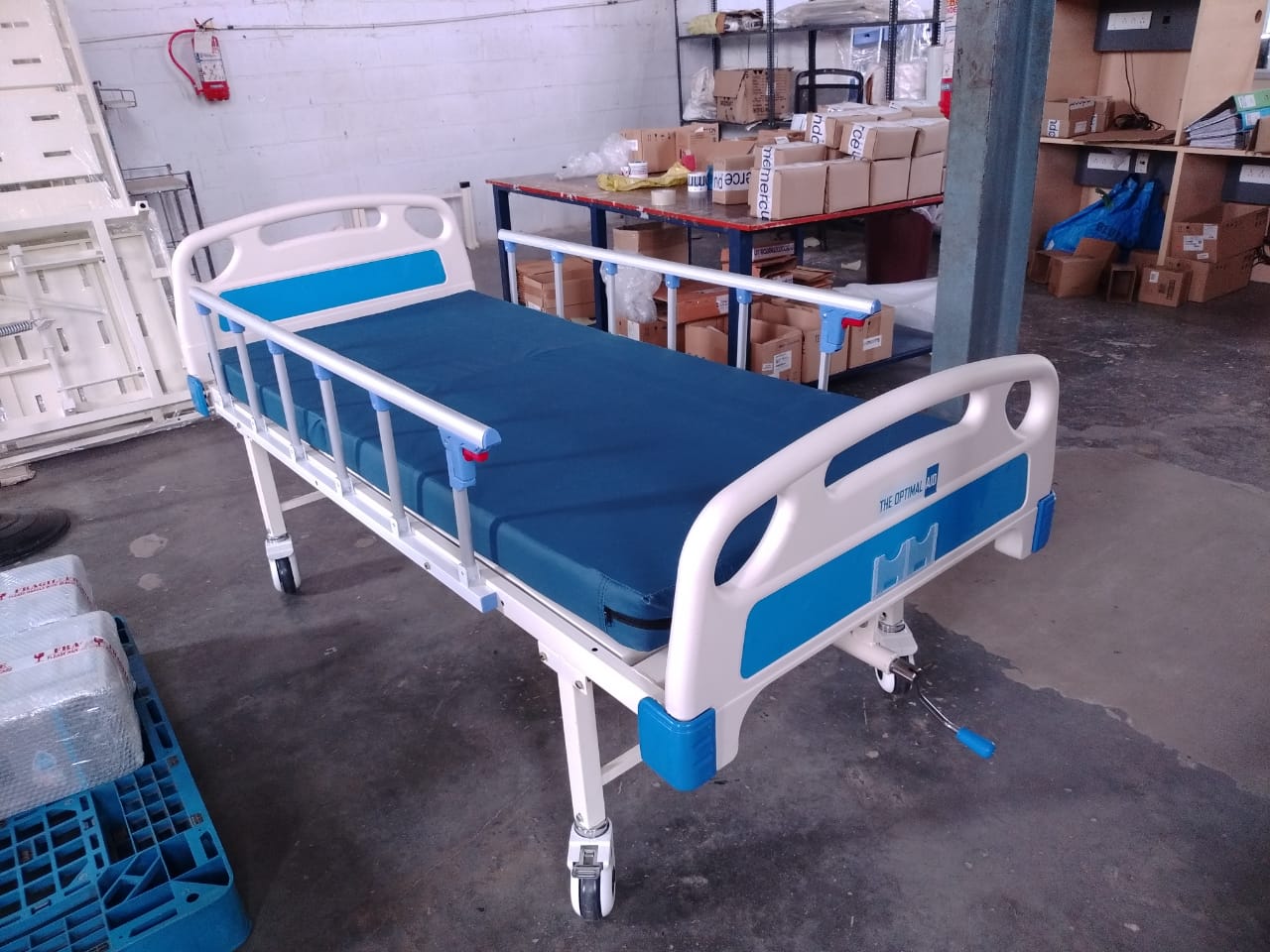 | Hospital Furniture Semi Fowler Deluxe (Manual) Bed – User Manual In Chennai 🔧 1. View product → |
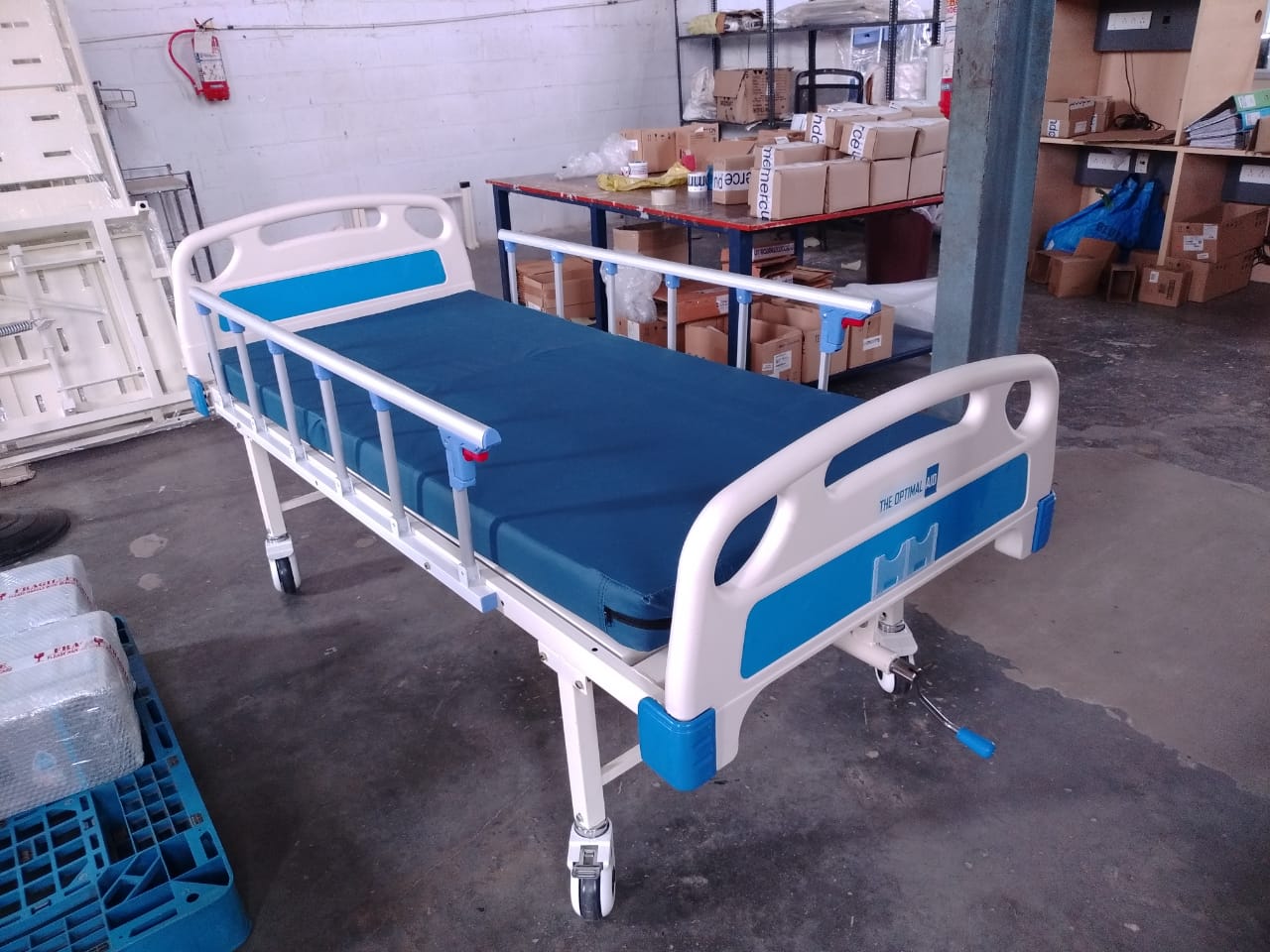 | Cot Series Semi Flowler Cot Deluxe Wheel Leg Manual Semi Flowler Cot Deluxe Wheel Leg Manual In Chennai. We wre one of the Leading and best quality manufacturer of Hospital Furniture In chennai and we... View product → |
Frequently asked questions
How does a Semi-Fowler backrest help with everyday bedside care?
Backrest elevation supports feeding, examinations, breathing comfort and repositioning without manually lifting the patient’s upper body.
Why choose a manual hospital bed instead of an electric model?
Manual adjustment avoids dependence on electricity and suits hospitals that prioritise mechanical reliability, straightforward servicing and power-failure operation.
Which specifications make a deluxe manual bed measurable?
Compare the backrest adjustment range, safe working load, frame dimensions, castor size, rail configuration, mattress platform and finish.
What maintenance risks should Chennai hospitals control?
Inspect crank mechanisms, fasteners, castors, rails, mattress fit and painted or coated surfaces for wear, looseness, damage and corrosion.
Related product
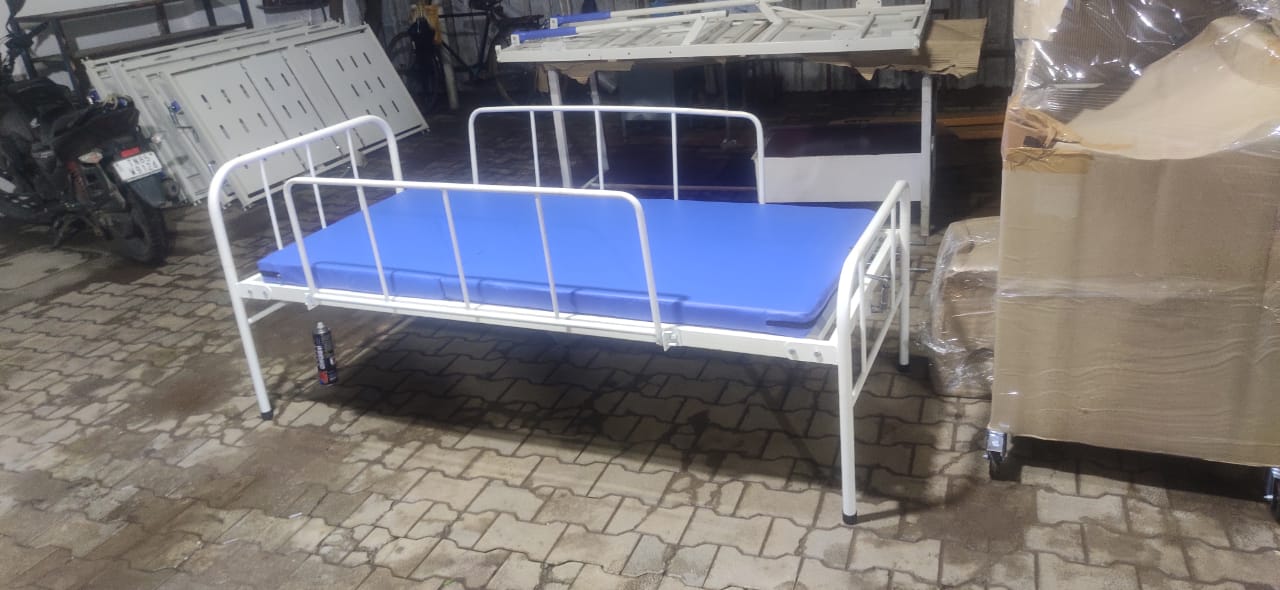 | Hospital Furniture Semi-Fowler Mattress It’s a 2-section (or foldable) medical mattress used on Semi-Fowler beds. View product → |
Keywords